Showing posts with label DVDs. Show all posts
0

It's All About The Benjamin

Published on Sunday, November 10, 2013 in , , , , , , , , , , ,

Procsilas Moscas' number grid pictureEven if you're not into mathematical magic and mental math, you're probably familiar with Dr. Arthur Benjamin from one or more of his TED talks.

Another video of his mathemagical feats has surfaced on the web, but this one includes the methods of each routine!

This video lecture is titled The Magic and Math of Mental Calculation, and was held at the 2013 Martin Gardner Celebration of Mind in Washington DC, courtesy of the Mathematical Association of America and Math For America-DC.

The Magic and Math of Mental Calculation is done in full lecture style, and runs about 78 minutes. It is introduced by MAA's Ivars Peterson and Thinkfun (Amazon.com link) CEO Bill Ritchie:


Granted, the single unmoving camera angle could make things hard to follow, but I've gathered numerous links which I hope will make everything clearer.

First, Ivars Peterson mentions that April is Mathematics Awareness Month, with the 2014 theme being Mathematics, Magic and Mystery, after the Martin Gardner book of the same name (Amazon.com link).

Dr. Benjamin starts out by squaring 2-digit numbers in his head. This feat is relatively easy to learn, and the Mental Gym even features a 2-digit squaring tutorial and quiz. The later explanation features some excellent advice on working up to squaring 3- and 4-digit numbers.

This is followed by the missing digit feat, which is explained much later in the video, so I'll come back to it.

Next up is a magic square feat. The explanation can be tricky to follow. Fortunately, Dr. Benjamin has posted the instructions for his Double Birthday Magic Square online for free. There are several essential tips in the video that make the performance of this far better than if you'd just learned from the PDF alone.

When he talks about how he developed the magic square routine in the first place, he mentions a 2003 magic square article in a magic magazine. This seems to be Harry Lorayne's article, 4×4 Magic Square Breakthrough??. The original magazine article isn't easy to find, but the entire article was reprinted in Harry Lorayne's book, Mathematical Wizardry (Amazon.com link), which I reviewed here back in 2006.

The calendar feat, as many Grey Matters readers already know, is a favorite of mine. You can follow along Dr. Benjamin's somewhat brief explanation of the feat with the help of the Day of the Week For Any Date tutorial and quiz here. I have done my own work simplifying the calendar feat in my Day One ebook.

Impressively, Dr. Benjamin even fields a question about mentally determining whether a 3-, 4-, or 5-digit number is prime or not, despite not performing any feats related to this. If you're wondering why he's using this particular approach, my prime number testing post from earlier this year may make things clearer.

Coming back to the discussion of the missing digit feat, it's hard to make this much clearer than it is on the video. There is the amusing question of whether zero is an even number, which Numberphile tackled in one of their videos.

Dr. Benjamin also discusses here what to do when you're not sure whether the missing digit is a 0 or a 9. My preferred approach here would be to say, “I'm not getting anything. It wasn't a zero, was it?” Note that by making this a negative question, you can follow up their answer with “I thought so” or “I didn't think so”, which makes you sound like you knew all along, even though you're just asking a question.

The lecture is wrapped up with the mental multiplication of 2 five-digit numbers. This isn't done as quickly as the other squaring feats. Instead, this is done with lots of verbal calculation and what seems to be some nonsensical words thrown in. First, as he explains after getting the number 37,947 to square, he points out that he's going multiply 37,000 by 947, double that number, square 37,000, square 947, and add all those results together.

Why is he doubling that first calculation? Effectively, he's breaking the problem down into (37,000 + 947)(37,000 + 947). As with any problem of the form (a + b)(a + b), Wolfram Alpha shows that the result must be a2 + 2ab + b2.

The mysterious words he's uttering are actually ways of remembering numbers. Arthur Benjamin has another free lecture available online that details how to memorize numbers like this.

As with many live lectures, this one winds up with several mentions, including that of Harvey Mudd College, where Dr. Benjamin teaches.

Several of Dr. Benjamin's books and DVDs are promoted in the lecture. Since Grey Matters is an Amazon.com affiliate, you can help support this blog by buying Dr. Benjamin's books through our affiliate link, his Secrets of Mental Math DVD (from which the above free number memorization lecture is taken), his Joy of Mathematics DVD, and/or any of the Amazon.com links listed above.

0

The Genius of Robert Neale

Published on Thursday, December 20, 2012 in , , , , , , , ,

Robert Neale performing Trapdoor Card for Michael Weber on the Celebration of Sides videoRobert Neale is a magician who is an incredible thinker in terms of methods, as well as a very spirited artist when it comes to presentation.

In this post, you'll get a glimpse of the mind of this amazing performer and inventor.

Back in 1983, Robert Neale released what has become one of his best-known routines, called the Trapdoor Card. This week's episode of Scam School teaches this classic, but sadly neglects to credit the inventor:


Robert Neale himself has given Scam School permission to perform and teach his classic Rock/Paper/Scissors routine back in episode #71, published as “My First Trick” in Neale's book, Tricks of the Imagination:


Perhaps part of Neale's genius is in creating things that are so simple and yet so deceptive that those who aren't directly familiar with his work just think they're things that “have always been around.” Earlier this year, bicyclecards.com presented his Hypercard, first as a puzzle, then in a post explaining how it's made. They correctly credit Martin Gardner with popularizing it, but never mentions Robert Neale himself. Here's a video created by a reader of that tutorial:


If you really want to see the man himself at work, as well as learn some of his amazing thinking, the easiest place to begin is his Celebration Of Sides video. In this video, you see not only his amazing and ingenious approach to creating routines, but his warm and charming ways of presenting even the most abstract concepts. Here's a quick glimpse of some of the things shared on this video:


Hopefully, you've enjoyed this look at some of the work of one of the most creative thinkers in magic, and maybe even learned something new.

1

Draw the USA

Published on Thursday, March 08, 2012 in , , , , ,

Kyle Brooks' photo of USA license plate mapMnemonics are a great way to learn things like USA states, but they're not the only way.

Confucius once said, "I hear and I forget. I see and I remember. I do and I understand." In this post, we'll take that principle to heart and learn to memorize the states by doing, as opposed to just visualizing.

In this particular case, doing refers to drawing. Don't worry, you don't have to have any special drawing skills, or even any experience. All you need is pencil, paper, the desire to practice, and the practice itself.

Ken O'Brien of Mahalo.com will teach you how to draw the USA. The lessons start with this easy introduction on how to draw the 48 contiguous states:


The approach of breaking up the project into smaller, easier-to-manage parts is a great way to learn just about anything, not just drawing. When practicing this myself, I've found the recommended path is the best way to go:

Northwest
Southwest
Southeast
Northeast
Entire USA

You might be wondering why I'm bringing up drawing in a blog that usually focuses on memory and math feats. The real aim of this blog is to improve your mind, and have fun while doing it! Plus, focus and practice are essential to memory, anyway. When mastering the map, you might surprise yourself at how well you learn the states.

If you watch a documentary on the history of the states while practicing, it can help lock in each state. Not surprisingly, I found that watching How The States Got Their Shapes to be particularly helpful, since you get a better sense of the history and the reasons the shapes have those particular shapes.

Believe it or not, drawing a map of the USA can serve as a surprisingly entertaining memory feat, or even a bar bet. There are already some videos up of people impressing an audience by drawing the USA, and some of them taking longer than the 2 minutes that you should take to draw your map.

If you decide to present it as a feat, the facts you can learn from How The States Got Their Shapes can help add plenty of entertainment value. For example, are you familiar with the fact that the Tennessee/Georgia border is under dispute to this day?

Want another challenge after this? Take this feat to the next level by drawing the entire world. Just as with the USA, you can learn to do it from memory, or cheat a little and fold the paper to give you landmarks.

0

Yet Still More Quick Snippets

Published on Sunday, July 10, 2011 in , , , , ,

Luc Viatour's plasma lamp pictureJuly's snippets are here, and they're full of free mathematical goodies!

• Marcus du Sautoy, whom you may remember from his BBC series, The Story of Maths, has definitely been keeping busy. Besides that documentary, you can find his 10-part podcast series A Brief History of Mathematics available for free via the BBC (or, strangely, as an audiobook for sale). This is a great introduction to the giants of mathematical history.

You can also see him lecture for free about symmetry on TED, or about prime numbers at Hebrew University (via YouTube).

• I've talked about game theory recently, yet I only recently ran across a great tool for studying it. Gambit is a free game theory analysis program that runs on Windows, OS X, and Linux. There are two excellent and simple tutorials available on the site (available as both Flash movies and PDF documents) to get you started. It makes a wonderful companion tool to game theory courses, such as Game Theory 101 (free via YouTube), Ben Polak's Game Theory course at Yale (free via Yale, YouTube, or iTunes, course documents available at Yale link). I first learned about this while watching The Teaching Company's game theory course, Games People Play, which is also an excellent introduction to the field.

• Speaking of unusual calculators, iOS mobile device users should check out the free Magical Calculator app. Instead of just being a standard calculator app, you can prepare it with your own custom formulas and inputs (such as those for interest on loans or physics equations), and then you'll always have your own handy custom calculator ready! If you're familiar with InstaCalc website from BetterExplained, this is basically the same idea turned into an app.

Speaking of freebies, I'll have a very special one (non-mathematical) for you in Thursday's post!

3

Review: Magic and Mentalism of Barrie Richardson (Vols. 1-3)

Published on Thursday, June 10, 2010 in ,

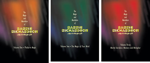
Barrie Richardson DVDsLast Thursday, I received the new Barrie Richardson DVDs in the mail, and I've been spending much time since, in order to bring you this review.

Even before these DVDs were released, there were several remarks about Barrie's performance just based on L&L's preview:


The best response to these concerns came from Steve Pellegrino's sadly-missing (at this writing) Mentalist Magazine, in his article New Barrie Richardson DVDs: Pre-Review (link is cached, be patient):


If ever there was a set of L&L DVDs that are going to create a divide – this is the set! So many people are familiar with Barrie’s wonderful books and are anxious to see the material come to life – if they already haven’t started performing the material themselves.

Mentioning the up-coming release to several close friends, most had the same reaction and that was Barrie isn’t the most dynamic performer. And that is true. Here’s one quote from a magic forum:


He is very boring to watch though. I only like mentalism when it’s fast, direct, and impossible.


And this is where the divide takes place. The material on the DVDs is great. He is an incredible thinker and the material is worthy to be in any mentalist’s repertoire. But Barrie’s presentations tend to be slow. So when buying these you need to know why you’re buying these.

Are you buying these to be entertained?

Are you buying these to potentially add new material to your act?

Let me ask you a couple of other questions.

Are you the type of a performer who is looking to have everything handed to them and all you have to do is learn the script?

Are you the type of performer who is 100% sure about their onstage character and prefers to write their own presentations?

If you’re an amateur, just looking to be entertained with some new DVDs, you will be disappointed. If you’re a working pro that can see past the presentation on the DVD and envision their own take on it, then you will benefit from these many times over.


This is very true. If you're used to learning not only the methods but the presentations from a given set of DVDs, then you're going to miss the value of these DVDs.

Side note: How can the commenter mentioned above not consider the routine in the last 3 minutes of the preview to be fast, direct, and impossible?

The two things that stand out the most in these DVDs are Barrie Richardson's professorial style of presenting, and his ability to get great use out of the simplest of tools. The latter actually seems to be an outgrowth of the first.

Most of the routines are wrapped in a story or metaphor. Even if this isn't currently a part of your style, there are many good lessons here in using this style that you may find yourself considering this approach for some routines.

Barrie definitely likes his methods to be simple, direct, and effective. You can see in the videos that he tends towards methods and routines that work just as well for a few people as they do for a large crowd. He also tends to use the same principles and methods repeatedly and appropriately, yet is smart enough to disguise them by giving them different contexts.

A good example of Barrie's approach is the Impossible Knot Routine on volume 1. The GW Hunter Knot is known by many magicians, the majority of which don't learn its true value. If, as Rudy Coby suggests, you learn with simpler tricks, and get your audience to respond to you instead of the tricks, this is one of those effects that can be very valuable. For example, Timothy Hyde uses the Hunter Knot to reliably draw an audience.

As an aside, many people associate Barrie Richardson with mentalism, but a look at the effect descriptions will show that there's plenty of routines for both magicians and mentalists.

The methods themselves are usually first taught solo by Barrie, which is often an overview that assumes much of the knowledge that is required. After the solo teachings, Barrie is often joined by Michael Weber, where details of the method are more fully fleshed out. Often, they also discuss other possible presentation ploys, and even alternative methods!

The Bill In Lemon routine is an excellent example, where the importance of moments, appearance, and attention control are stressed. Even if you never do the Bill In Lemon, there's plenty here to learn and apply in a wide variety of effects.

Amusingly, those who don't see the kind of performance they like in the preview will most likely miss the gems in the discussions with Michael Weber that could help them make their presentations more effective and in line with their ideals!

On volume 2, the focus turns to mentalism effects. However, to think them only as mentalism is limiting, since it wouldn't be difficult to adapt many of them to magic.

In the above preview, you see Dollar Divination and Thoughts With Wings performed, both from this volume.

As you can see by now, I'm very impressed with the lessons of presentation taught on the DVD. That's why I'm not discussing individual effects here. In Second Spot, as a matter of fact, the method is almost secondary. Rather, the audience management and presentation options get more attention here, especially in the discussions with Michael Weber.

There's also a repeated emphasis on giving the routines an “everyday” feel. Sure, the happenings are magical, but they're associated with experience to give them a very realistic feel. This is only part of the true value of the story/metaphor approach used so much throughout these DVDs.

The 3rd DVD will be of special interest to Grey Matters readers, as it contain math- and memory-related routines. Often presenting such feats is a real challenge because it's all too easy to present them with an air of superiority.

There's a wide variety of approaches here that are used to remove that sting. In Quartet, they become part of the action as the cards are identified. In Zebras and the Magic Square, they're drawn in with an incomplete metaphor, which is brought full circle on after the magic square itself is done. The metaphor is so important here, even anyone who knows the same magic square method you do will have cause to enjoy it, and not feel the need to “catch” you. In the Human Movie Projector, the audience themselves provides the climax!

All this talk about metaphors and stories may sound high-minded and theoretical, but it's really very practical. I suggest the book Made To Stick for anyone who truly wants to understand what Barrie is doing.

Also, it should be noted that not even Barrie feels the need to present things this way every time. In the Memorized Time Magazine piece, he lets the feat be exactly what it sounds like: someone recalling the details of a magazine they've memorized.

It's important to note that, by the time this piece is presented, the audience should already be at ease with the performer from previous routines. Also, Barrie makes this more interesting by employing related items that aren't part of the magazine. This makes him seem less like a machine giving data, and more human. In the discussion with Michael Weber, the lessons in what NOT to do when presenting this feat are probably even more valuable that what to do!

Overall, I'd have to say that this is not a tape for beginners. If you're already developing a consistent stage persona, you're in the target audience for this tape. Even if you never use a single piece from these tapes, the lessons in presentation and thinking applied to other routines are more than worth the price of these tapes.

As a more complete look at the thinking involved, I'd also recommend his books Theater of the Mind and Act Two, as companions to the tapes.

Magic dealers should give the following test to anyone interested in these tapes: Show the footage of Michael Weber cutting up a Jerry's Nugget card box (a brand of cards that are often highly sought after and valued by card magicians). If they wince, it's a good sign that such a person would get no value from the Barrie Richardson DVDs.

0

Upcoming DVDs: Magic & Mentalism of Barrie Richardson

Published on Thursday, May 20, 2010 in , , , , , , , , , , ,

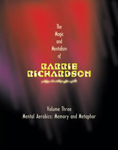
Barrie Richardson DVD Volume 3This isn't today's full blog post. It's more of a quick note about an upcoming release that Grey Matters will be interested in. Another full post is coming later today.

L&L Publishing is offering a special pre-release price on their upcoming Barrie Richardson DVDs!

Barrie Richardson's two major works, Theatre of the Mind and Act Two, are already regarded as vital works in magic, mentalism and presentation.

Grey Matters readers already know of them because of not only the amazing math and memory feats contained within them, but also the skill and ingenuity in developing presentations that make an audience respond.

The contents of the DVDs are listed here, and you'll note that Volume 3 is called MENTAL AEROBICS: MEMORY AND METAPHOR. Yep - it's chock full of the kind of stuff we here at Grey Matters enjoy, like magic squares and memory feats.

Below is a video excerpt of Barrie performing Dollar Divination and Thoughts With Wings. Before you view it it, thought, I recommend reading the excellent post New Barrie Richardson DVDs: Pre-Review over at Mentalism Magazine, as it explains some very important points about the whole point of the DVDs.

0

MemoryEffects.PDF Updated!

Published on Thursday, April 22, 2010 in , , , , , ,

MemoryEffects.pdfIt's been a while, but it's back! My famed MemoryEffects.pdf document has just been updated!

The last update was back in June of 2009, before the current look of the site was even in place. Because of this, many of Grey Matters' newer readers may not be familiar with my list of memory-related effects.

As many of you know, I'm a big fan of memory work, and especially when used in a performance. Because of this, I began assembling a list of memory-related effects. I first published it 5 years ago this week!

The list is broken down into 4 major parts:

1) Articles - These are articles about different approaches to memory and mnemonics.
2) Legitimate Memory Demonstrations - Just what the name implies, of course.
3) Covert Use of Memory Technique - These are routines in which memory is used in secret, rather than as an open display.
4) Simulated Memory Demonstrations - These routines that give the appearance of requiring a trained memory, but actually don't.

In each section, there's the title of the book/effect/routine, a brief description of it, and then the original source(s) and the author. It doesn't teach any of the effects themselves, rather it simply shows you where you can find them. In trying to be complete, I can't say that all the resources will be easy to find, as some of the works are out of print. However, the document currently totals 69 pages, so there's plenty to explore, even with in-print sources!

The most updated version is always available both here on Grey Matters and over at Scribd.com. If you like, you can also embed the document on your site or blog, as shown below. You can also download as a PDF or a text file.


If you have any additions to the list, please let me know in the comments, and I'll include them in the next update.

0

Review: Beauty and Mathematics

Published on Thursday, November 12, 2009 in , , , , , , ,

Dr. Frank Wang's Beauty and MathematicsI first discussed Dr. Frank Wang's educational DVD, Beauty and Mathematics, back in 2006, when I linked to 2 videos from the DVD's product page.

Dr. Wang has recently been generous enough to send me a copy of this course, so I thought I would share my thoughts on it with Grey Matters readers.

Disclaimer: I was provided with the complete course by Dr. Wang himself and was not charged for it. I do not make any money off the purchase of the course. The thoughts below are purely mine as a result of going over the course on my own time for the purposed of informing Grey Matters readers.

The course itself, whose full name is Beauty and Mathematics: Mathematician's Search for Order and Pattern, comes as a DVD set and handouts related to the various sections of the course. There are also a few advertising and promotional items included, such as a pocket protector and a sample board for an arithmetic challenge called Witzzle Pro.

The DVD case contains 2 DVDs and a CD-ROM. The first DVD contains the presentations, and the 2nd DVD contains the explanations. The CD-ROM contains handouts related to the each section in the form of PDFs. Pre-printed copies of these PDFs are also included with the course.

Dr. Wang currently teaches at the Oklahoma School of Science and Mathematics, and much of the presentation footage is shot at an assembly there, with some footage from a teacher's meeting where he lectured. The presentation talks are the basics, and even include some amazing demonstrations, including the "The Birthday Paradox" and "The Death-Defying Feat" (free videos and worksheets available at link).

Each segment of the lecture follows the theme of finding order and patterns from some sort of random mix. The segments included focus on the Rubik's Cube, Ramsey Theory, the small-world and birthday paradoxes, random walks, crumpled paper, Pi from random numbers and the Death-Defying Feat (as linked above). These sections are designed to grab you, and draw you in, and are presented with humor, fun, and even surprise and mystery in some cases.

The explanation DVD, by contrast, is shot in a studio, and explains each section in more detail. The focus here is on clarity, as it should be. The explanations often go deeper into each topic than you'd expect, which pleasantly surprised me. Even when discussing how the number of Rubik's Cube configurations, for example, he delves into decimal point vs. decimal comma and short scale vs. long scale. Even on topics where I was fairly sure I understood them, such as estimating Pi from random numbers, I learned more than I expected.

I'll sum up this review in 2 different ways, as I'm really writing for 2 different audiences in this review. First, for this set's intended audience of teachers and students, I definitely recommend this set. Math can often be hard to teach, and even harder when trying to grab your student's interest. The approach in the Beauty and Mathematics set, of demonstrating order coming out of apparent chaos, and making the demonstration of that fun and engaging, is a great way to help your students truly learn. Much of the material you may have thought of as too advanced for some students becomes clear, intuitive and understandable with Dr. Wang's approach.

Second, Grey Matters readers should already be interested in this, and fun and math have long been a focus of this blog. Unlike many education products, the $49.95 price it's affordable, and not priced for only schools. If you've enjoyed the mathematics approach used in places like this blog and BetterExplained, where intuition and clarity are paramount, you'll enjoy Beauty and Mathematics.

1

iPhone and iPod Amazement

Published on Thursday, June 11, 2009 in , , , , , , , , , ,

Werner Miller's Age SquareOn Monday, Apple amazed many of it's fans at the WWDC 2009 Keynote, including new announcements about Safari 4, Snow Leopard, the new MacBook Pro lineup and the new iPhone 3G S. Even if you're not working for Apple, you too can still use the iPhone or iPod Touch to amaze people yourself.

The iPhone Flashcard Apps I recently listed should not be forgotten here. The trained memory you develop with these can be used in many ways to amaze people, such as in a memory demonstration or as the secret to a magic effect.

If you hadn't noticed yet, there are already a good selection of iPhone- and iPod Touch-based magic effects.

Mind Reading

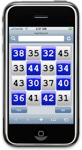
• Age Square (Free WebApp Zip Archive!): In this effect, you show a magic square, and ask if the person sees their age in the magic square. They then go through 4 screens, each one with several squares highlighted, and asking whether the person sees their age among those highlighted squares. At the end, another magic square is shown, and it adds up to the person's age in every direction! The program will even optionally step through the numerous arrangements that add to their age.

Werner Miller created this effect especially for Grey Matters. There is now a video tutorial for Age Square available on YouTube. If you'd like to try it out, you can try it out here, but if you're going to do this on any kind of regular basis, please download the file archive, unZIP it, and upload it on your own server space!

• Epicore iPhone Magic (iTunes Link): Rather than a single program, Epicore is an iPhone development company that has a very strong selection of magic routines for the iPhone. From reviews by fellow magicians, their magic app developers think deeper about their magic, and the routines are far more deceptive as a result. Their routines include MindCard (iTunes Link), iDetect (iTunes Link), iCoinPredict (iTunes Link), iCardPredict (iTunes Link), DestinyCard (iTunes Link) and FaceCard (iTunes Link). Faria, from Magiclaffs.org, who first told me about Epicore's magic apps, has a handy tip for those who buy and perform FaceCard: To let your audience member have the resulting picture as a souvenir, press the home and power buttons at the same time to take a snapshot of the screen, add your contact information onto the photo automatically using Imangi Studios' PhotoMarkr app (iTunes Link), and send it to the spectator's e-mail address!

• Google App: In this routine, you have a spectator name any playing card, and then have them ask Google what their card is. Real Google search results are returned, each containing the name of their playing card!

• iForce (iTunes link): Through an interesting use of the iPhone's capabilities, you can apparently predict the outcome of an amazing array of choices. It's disguised as a drawing program, which is also available in the iTunes store. The whole idea is very well thought out. To get a better idea of what it does, watch the videos at the iForce link above.

• iKnow: You show someone your playlist of favorites, and have them choose one song randomly off this list, listen to it, and then imagine the song they heard. You then listen in their ear, as if you're trying to hear what remains of the rhythm in their head, and then name the chosen song! This effect isn't limited to just the iPhone and iPod Touch. It will work with just about any MP3 player out there!

• iMagic: In this iPhone card routine, you have several spectators name a card by having one choose number or picture cards, one choose a suit, and the final one choose the number. Without touching the iPhone, the named card appears briefly over the iPhone menu, and then vanishes. The hands-off handling of the iPhone, along with the card being named instead of chosen, add to the seeming impossibility.

• iSensor (iTunes link): In this effect, you show a screen with 5 ESP symbols (star, cross, wavy lines, circle and square), turn the phone face down, and ask them to name anyone of the symbols. You then pick it up and show that it is the only symbol remaining on the screen! If they think this is simply done with Voice Control, you can repeat the effect, and have them make their choice known by drawing the symbol in the air. I first mentioned this one back in May, but it deserves mention here, too. There are effects with a similar principle, such as iMystical and iThought Receiver, but iSensor comes across as the most mystifying and deceptive.

• MagiCard (iTunes link): In this effect, a card is chosen from a real deck, and the image of the selected card appears on the iPhone, all without the performer ever touching the iPhone! As you can see from the videos, there are actually multiple ways you can present this effect. The hands-off nature of this routine makes it very deceptive.

• MindBeam: In this video, you beam an app to another persons iPhone. The App displays 3 playing cards or postcards, and they secretly choose one while you're out of the room. When they call you back in, you can name their selection! Performed properly, this can be an amazing piece.

• Mobile Opener: This effect is a professional stage magic routine that isn't limited specifically to the iPhone and iPod Touch, but members of your audience can use their iPhones to take part in it. In the routine, numbers given by the audience are then totaled. The total is then shown to have been predicted. It sounds simple, but the real strong point is the presentation, which is intended to generate audience interest at the beginning, and work the next speaker or the client's product/message into the effect.

• Pick Any Card (iTunes Link): A face card is on the face of the iPhone/iPod Touch, and a spectator is asked to guess whether this card is red or black, and their guess is shown to be correct. Next, the performer asks the spectator whether they think a face down card is high or low, and the spectator's guess proves correct again! Since the spectator seems in tune enough, they're asked to name any card, and then to flip the card over on the screen. Think you've got this one figured out? If so, consider the fact that at no point in the routine does the performer ever touch the screen!


Production Effects

There are numerous production effects in which you appear to remove an object from the screen. They all have the same basic method, but in the right time and place, these can be amazing interludes. Among the objects you can produce from your iPhone are cards, bills (comedy version), coins (including slot winnings!), popcorn, matches and sponge balls.


Other
Here are the works of those venturesome soles who like to create magic that doesn't fit neatly into pre-determined categories.

• Books: If you look, there are many books of magic effects that have many routines that can be adapted to the iPhone or the iPod Touch with a little thought. If you're going this route, my first two must-have recommendations are Impuzzibilities and Further Impuzzibilities by Jim Steinmeyer. These two works not only teach original effects, but are excellent object lessons in how to disguise mathematical and other self-working principles. From there, good sources of inspiration can be found in Karl Fulves' Self-Working series of books, such as Self-Working Number Magic and Self-Working Mental Magic.

• Easy iPod Magic: This magic.about.com page has 2 free tricks, The Animated iPod Man, in which your iPod seems to bring a paper-drawn stick figure to life, and The iPod Card Trick, in which the iPod makes the name of a selected card appear in a square drawn on paper. The former is cute, and the latter seems to be the same, until the iPod is removed, and the real drawing has changed. The screen ratio of the included videos are intended for classic iPods, but the idea could easily be adapted for the iPhone and iPod Touch. Even if you don't have the skills or software to create a video, a sequence of picture in the photo album could be used to make the picture appear.

• Magic Compass (iTunes link): Simply put, you can place any object anywhere around the iPhone, and the Magic Compass will point right to it. With the iPhone 3G S' new compass feature, this effect is actually quite relevant. The same site also offers a cuter version of the same trick with bunnies (iTunes link).

• iPunk'd: You definitely won't find this one on the App Store, as there's nothing to download! In iPunk'd, you take someone's ear phone cord, and cut it with scissors. Before they kill you for destroying their headphones, you magically restore the cord! Yes, this is the cut & restored rope updated and made relevant. If you're familiar with how to use a certain silk-vanishing gimmick to cut and restore a rope, that would make this routine even more deceptive.

• iScan: This one isn't quite a mind reading effect, and it isn't quite a production, so it wouldn't fit in the first 2 categories. In iScan, a card is selected from a deck, returned, and shuffled. You then use your iPhone to scan the spectator. You then run your hand back and forth underneath the iPhone's camera, and the image of the card appears on your hand. Here's a YouTube video of the effect being performed, so that you can get a better idea of this strange effect.

• iUtility: This is from the makers of the Magic With the iPhone DVD below, but instead of having the tricks happen on the iPhone/iPod Touch, this DVD focuses on using the use of your handheld as the method behind tricks, such as switches or vanishes.

• Magic Tattoo (iTunes link): A number is chosen, and used to find out which ESP symbol corresponds with that number. That symbol is then dragged onto a picture of a hand, where it appears on the palm. When you lift the iPhone off of your hand, that same symbol is on your real palm!

• Magic With the iPhone DVD: Nicholas Byrd has put out a 2-disc set of iPhone magic. The first is a performance and instructional DVD, while the other is a data disc, containing all the files needed to perform the effects. Among the more standard iPhone magic effects, such as producing money and the princess card trick (which was overdone on the web long before the iPhone came along), there are more intriguing uses, such as a Hot Rod routine, a penny-to-dime effect, a prediction effect with the icons themselves, and more! The Unofficial Apple Weblog has a review of it here. Not enough for you? You'll be glad to know there's a 2nd volume available now, as well as iUtility (above).

• Predictext (From Mind Blasters): In this routine, you text a message to someone in the audience, and then have them shuffle, cut and deal half of the deck, as you do the same with the other half. You ask if it would be amazing if both sets of dealt cards would have all matching pairs on top (such as both red 10s, both black 5s and so on). Unfortunately, it doesn't work out. However, the top cards on the spectator's pile is correctly predicted on the text message sent earlier! This is probably a rather strange entry for this list, as it depends on a feature most cell phones have, but isn't readily available on the iPhone – SMS Templates. However, there are 3rd party apps which can offer this feature (even for the iPod Touch through AIM!). The routine could also be reworked with AlibiSMS (below), but as you ultimately want your contact information left on a spectator's cellphone, I wouldn't go this route.

• Spirit Photo: This effect seems to dance on the border between prank and magic effect. You borrow a spectator's iPhone, mentioning that you're going to install a “Spectral Filter” for the iPhone camera that can photograph dead spirits. Once the filter is installed, you mention that it works best with pictures of dead people, so you ask them to take out a bill of any denomination. You snap a picture of their bill, but when they look at it, the skull of the person on the bill appears on it! It really is in their photo album, and they can keep it or delete it as they wish.


Not Magic, But . . .

• AlibiSMS (iTunes link): This is a fun app that lets you enter a text message that can be scheduled to come up on your phone later, as if it were happening at that time. With a little creative thinking, this could be used to reveal a prediction.

• Banner (iTunes link): This could be an interesting way to reveal a prediction. It's appears to be an array of LED lights, across which a message scrolls. Here in Vegas, sending a message that way can be very thematic. In a similar vein there's Light Writer (iTunes link), which is basically an iPhone version of those SkyLiner novelties (although since the SkyLiner is only $20/unit, I think I'd rather risk dropping one of those than an iPhone or iPod Touch).

• Deckster (iTunes link): This isn't quite a magic effect, but rather a playing card deck simulator. This App goes to great length to simulate the experience of a deck of cards, down to the opening of a new deck (you even have to remove the seal!), dealing and shuffling the deck in numerous ways (overhand, riffle shuffle and more). The web page hints you may even be able to deal seconds and bottoms, but they're not saying exactly how. This is just too creative not to share here.

• Magic Café's App Forums: The Magic Café now has 3 forums dedicated specifically to magic apps: APPS-alutely (for general discussion of apps), APPealing or APPalling? (for app reviews), and APPearing Soon... (for discusing app announcements, rumors, and marketing). This is a great way to keep up with the latest magic apps.

• Mathemagics (iTunes link): This program gives you lessons on how to quickly solve several challenging arithmetic problems in your head, and then lets you practice your newfound skills. Lightning calcuator-style feats are not only amazing in and of themselves, but are also useful as a build-up to seemingly more difficult feats, such as mind-reading.

• QuickCal (iTunes Link): Do you perform the Day of the Week for Any Date feat? If so, this calendar app is the perfect way to demonstrate that you're correct. Just select the year via the spinning-wheel picker, and you can see a single month, 2 months, 4 months, 6 months, or even a whole year at a glance. True, you could use a perpetual calendar web app, but QuickCal is great for when you don't have a Wi-Fi connection.

0

2007 Grey Matters Gift Guide

Published on Sunday, December 02, 2007 in , , , , , , , , , , ,

Breaking VegasIt's holiday time once again! If you're looking for brain straining and entertaining gift ideas, you've come to the right place! Even better, many of the links I'll share with you will allow you to compare prices, so you can get the best deal on those gifts which strike your fancy.

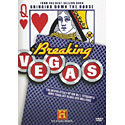
I live in Las Vegas, so I'm going to start close to home. Back in the late '80s and early '90s, a team of students and faculty from MIT formed a blackjack team that used mathematics, memory training, and nerve to take Las Vegas' blackjack tables for millions! The History Channel produced a documentary about the MIT blackjack team titled Breaking Vegas. One of the original team members, Ben Mezrich, has even written a detailed account of his time with the team, calling his book Bringing Down The House. We've all fantasized about winning millions in Vegas, and these true accounts show just what it takes, as well as the rewards and consequences.

Among the biggest news in entertainment this season is the return of Futurama! Among its fans, Futurama is known for including numerous examples of mathematical humor, some of it very advanced! If you know (or are) a Futurama fan, you can get caught up with the series by picking up vols. 1, 2, 3 and 4 of the series.

Once they're caught up, check out the newly-released Futurama movie, Bender's Big Score! The 90-minute movie opens, not surprisingly, with humorous references to their being canceled. After a few jabs at FOX, naked spamming aliens take control of Bender and make him travel through time to steal histories greatest treasures! Don't believe me? Check out the trailer! Among the bonuses on the DVD are a math lecture from the FuturamaMath.com team, called Bite My Shiny Metal X, a complete episode of Everybody Loves Hypnotoad, A Terrifying Message from Al Gore, and much more!

Of course, I can't mention popular math-based shows without mentioning Numb3rs! Now in its 4th season, it's proved that math can be entertaining, interesting and useful. Seasons 1, 2 and 3 are now available on DVD. The Charlievision sequences that help explain the mathematical concepts have proved especially popular with fans and educators. For those who want to learn more about the math explored in the first 3 seasons, the book Numbers behind Numb3rs: Solving Crime with Mathematics provides more details about them.

It's one thing learning about somebody else's skills in math and/or memory. Maybe you're interested in improving your own skill in these areas as part of your New Year's resolutions. But how do you go about it?

There are many fun ways to improve your memory, but as starting points, I would highly recommend the Harry Lorayne classics, The Memory Book and Super Power Memory.

For practicing the memory techniques you learn, I'm going to shamelessly self-promote my own memory training CD-ROM, Train Your Brain and Entertain (TYBE), available for both Mac OS X (view Flash demo) and Windows (view Flash demo). If you would like to try before you buy, try out the free lite version. You can download TYBELite for Mac here, and you can download TYBELite for Windows here. If you decide you like the software, but you believe it is too late to get the CD-ROM in time, it's also available for purchase as a download!

How about math? Wouldn't it be great to get better and faster at math? For improving your speed math skills, I highly recommend Secrets of Mental Math, Math Magic, Speed Mathematics and the classic Trachtenberg Speed System of Basic Mathematics.

Speed math is one thing, but how do you make math in general interesting enough to inspire further exploration? As anyone who knows will tell you, the best answer are the books of Martin Gardner. A good place to start is with his book Mathematics, Magic and Mystery, which uses magic tricks to inspire interest in mathematical principles. Martin Gardner's collections of his Scientific American columns, such as Hexaflexagons and Other Mathematical Diversions, Second Scientific American Book of Mathematical Puzzles and Diversions, and The Unexpected Hanging and Other Mathematical Diversions, are great ways to dive into math.

Martin Gardner isn't the only author who can make math fun, though. If you have a daughter in middle school who is struggling with math, Danica McKellar (whom you may remember as Winnie Cooper on The Wonder Years) has written a book called Math Doesn't Suck: How to Survive Middle-School Math Without Losing Your Mind or Breaking a Nail. For the more advanced math student, Prisoner's Dilemma is a fascinating study of John von Neumann's development of game theory. I posted about the basics of the Prisoner's Dilemma back in May, but this book goes deeper into it, discussing the effect this dilemma had on everything from simple everyday human interactions all the way up to the atomic bomb and the cold war!

Reading isn't the only way to better yourself! If your loved one is into brain training, how about giving them a black and crimson Nintendo DS Lite that comes bundled with Brain Age2? They'll also be able to play the original Brain Age and Big Brain Academy on it, as well!

Let's not forget about gifts that keep on giving. You can keep your loved ones smart all year with subscriptions to magazines like GAMES, Scientific American Mind and Mental Floss (a personal favorite).

If you have a loved one who regularly read Grey Matters or similar sites, please take a look around the Grey Matters recommended products store, which allows you to compare prices on popular items, and the Grey Matters original products store, where you'll find unique gifts that aren't available anywhere else. Happy holidays!

0

Review: Remember It: The Art of a Trained Memory

Published on Thursday, October 25, 2007 in , , , , , , , , ,

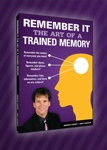
Remember It: The Art of a Trained MemoryMany of you may know Greg Gleason from his Theater Close-Up DVDs, which I reviewed last year. What you may not know is that he also teaches classes in memory training. Recently Greg Gleason released a new 2-DVD set called Remember It: The Art of a Trained Memory.

Volume 1 of Remember It starts off by demonstrating the power of a trained memory, with Greg performing the classic magazine memory feat for a live audience.

The actual lessons begin with the link system. First, Greg talks directly to the viewer about the basic principles of the link system. and then teaches how to use the system to remember the order of the alphabet backwards. On this DVD, the basics are usually discussed with Greg talking directly into the camera, while applications and demonstrations of each system are usually done in front if a live audience. This is very effective, as it gives a sense of personal instruction during the basics, while still offering encouragement by seeing others who are learning the ideas along with you.

Next, two version of the peg system are taught. First, the rhyming peg system is taught, followed by the more versatile and widely used phonetic alphabet. Key words that help visualize the numbers 1-10 are taught on the DVD, along with an explanation of how to expand the system. The included booklet also lists the phonetic sounds for each letter, as well as keywords for the number 1 through 100.

After this, use of the peg system for remember numbers and playing cards is discussed. When discussing how to remember playing cards, Greg really only discusses keywords for the clubs, but by the time he is finished, you understand enough to make your own keywords for the other suits. During the playing card section, a live audience is not only shown learning the technique for the first time, but using it, too! They are shown some of the cards, and they correctly determine which cards they weren't shown!

The first DVD winds up with an excellent section on names and faces, the importance of which I discussed in my previous post. If you've ever had problems with remembering names and faces, this section will quickly build confidence.

The second DVD focuses on further applications of the systems taught on the first DVD. The order of the 50 U.S. states in alphabetical order is taught using the link system. Greg then uses the peg system to teach the order of the 43 U.S. presidents in and out of order.

The next section is my personal favorite, as he teaches how to remember 400 digits of Pi! Yes, of course you can learn the Pi feat on this site. As a matter of fact, it's my approach he's using on the DVD and, yes, he credits me and included it with my permission. If you're thinking that this fact makes this a biased review, rest assured that you are correct!

To wind up the DVD, Greg teaches the classic age cards routine, along with some tips for using it to help potential customers remember you! Everything taught on the second DVD is also detailed in the booklet, so you can learn at your own pace.

Although I admit to a strong bias in this review, I still think it's a great DVD. This DVD is worth it not just for the instruction you get, but for the encouragement and personal touch that it adds to the learning experience. I definitely recommend Remember It: The Art of a Trained Memory.

1

Numb3rs' New Season

Published on Sunday, September 23, 2007 in , , , , , , ,

Numb3rsIt's almost time for the 4th season of Numb3rs! If you're not familiar with the show already, check out my original Numb3rs post, as well as the whole Numb3rs category to get a better idea of the show.

The best way to get an idea of the show, of course, is to watch it. Season 1 (13 episodes) and Season 2 (24 episodes) are already on DVD. Season 3 (24 episodes) will be released this Tuesday, along with a Three Season DVD boxed set!

If you have an iPod, you can already purchase Season 1 (by episode only), Season 2 and Season 3 from the iTunes store. Update (Oct 1): The subscription to season 4 is now available, as well. Even if you're not sure about purchasing whole seasons yet, buying just the season 3 episodes The Mole and The Janus List, a total of only $3.98, is a great way to get ready for the season premiere.

Since it's been almost 4 full months since the season-ending cliffhanger aired, and was just re-aired last Friday, I have no qualms about discussing it. In the 4th episode of season 3, The Mole, Don's (Rob Morrow) FBI team is investigating the death of a Chinese interpreter. The murderer turns out to be Dwayne Carter, who saved agent Colby Granger's (Dylan Bruno) life in Afghanistan, when they both served in the Army's Special Forces.

This doesn't seem important until the season-ending cliffhanger. In The Janus List, a list revealed by a poisoned British secret agent reveals that Colby Granger is a double agent for the Chinese government. The last thing you see in that episode is both Carter and Granger being taken away to be tried for treason.

There are other questions that will hopefully be answered this season. Will Megan (Diane Farr) decide to stay on with the FBI after her DOJ assignment? Since Larry (Peter MacNicol) has a new outlook on life after being on the space shuttle, what will happen when he sees Megan for the first time? While we've seen "Charlievision", like in this scene, the The Janus List showed us the first instance of "Donvision", when he realizes that the bombs on the bridge look like a G major scale. Will Don start understanding Charlie (David Krumholtz) better in the new season?

The new episode will air on Friday, September 28th. In this clip, director Tony Scott talks about the making of the season premiere:


So, what can we look for in the new episode? I'll let the season 4 premiere trailer speak for itself:

1

A Better View of Math

Published on Thursday, July 05, 2007 in , , , , , , , ,

BrainIn Carnival of Mathematics XI, I began by discussing the ways in which math is commonly viewed. I thought this topic deserved further attention.

Leland McInnes highlights the problem itself by pondering what would happen if we taught English the way we teach mathematics. This article really helps you understand the problems the modern mathematics teachers face.

David Appell, in his article Math = beauty + truth / (really hard), sums up the problem quite well. The trick with math is getting them interested in the mystery, the result and the process. This can be done, as the Computer Science Unplugged videos demonstrate. Another good example is the journey taken by Andrew Wiles to solve Fermat's Last Theorem.

Often, the best way to create interest in math is to change perspective. One of the most classic examples of this approach would be Edwin Abbott's 1884 book, Flatland, about life in a 2-dimensional world. The hero, A. Square (yes, that's a proper name), learns about the nature of dimension after encountering lines, points and spheres. This great work is even being turned into Flatland: The Movie, which is now available on DVD to schools, and will be available as a home DVD later this year.

What can happen when students are properly motivated? Daniel Greenberg shows that it can take only 20 hours to teach 6 years worth of math.

This challenge is a large part of the reason I started this site. If brainy topics can be made interesting, and even entertaining, then perhaps we can get more people to take a closer look at them.

0

Numb3rs, Season 3

Published on Thursday, May 31, 2007 in , , , ,

Numb3rsNumb3rs has just wrapped up its third season with some big surprises and puzzling character questions (WARNING: This link contains spoilers!).

Numb3rs' season 3 DVD is tentatively set for a US release on September 18, 2007, and CBS has renewed the show for a 4th season, so now seems like a good time to go over the series.

There are a few things that I haven't covered in my previous Numb3rs posts.

Popular Science Magazine covers one thing I've puzzled over in the past few years, and that is just when prime-time TV went from bathing suits to lab coats.

Eric Weisstein, whose Mathworld site I've written about numerous times, and covers The Math(ematica)Behind Numb3rs. This is an especially good article, bothe because of the links that allow you to dig further into the math used in the show, and because Eric himself is part of the mathematical research team for the show!

Until the Season 3 DVD is released, I suggest the summer re-runs, and perhaps the upcoming August release of The Numbers Behind NUMB3RS: Solving Crime with Mathematics.

0

TV and Movie Math

Published on Thursday, May 10, 2007 in , , , , ,

Numb3rsJust how does our society think of mathematicians? One of the best ways to find out is to look at their portrayal in movies and TV.

The question is, just where do you find such portrayals? Oliver Knill's Mathematics and Movies page (Flash required) is an excellent place to start. It can be surprising how much math has appeared in your favorite movies and TV shows.

Once you realize the quantity of math out in popular media, how is the quality? Just because you hear the Pythagorean theorem stated doesn't mean that time was put into researching it. Thankfully, Alex Kasman comes to the rescue with his Mathematical Fiction page, in which the stories are rated not only for the quality of the story, but the accuracy of the mathematical principles, as well.

Of course, some shows have already established their reputation for mathematical accuracy among their fans. Numb3rs quickly comes to mind. Futurama and the Simpsons (surprised?) are also great sources of high quality mathematical principles, and even mathematical humor! As noted on Bender Bending Rodriguez' Mathematical Curiosities page, even jokes in the background of Futurama are well researched.

If you like math humor like this, you'll be see more like this when new Futurama episodes arrive in 2008!

0

Review: Sessions With Simon, Vol. 3

Published on Thursday, March 22, 2007 in , , , , , , ,

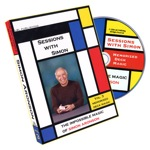
Sessions With Simon, Vol. 3: Memorized Deck MagicNo, you didn't miss the first two reviews. I'm focusing on just one volume of the series, since volume 3 of Sessions With Simon series focuses entirely on magic with a memorized deck.

The “Simon” in the title is none other than Simon Aronson, who is known, among his other talents, as a master of the memorized deck. The video opens with performances of routines which will be familiar to readers of Simon Aronson's books, such as Try The Impossible.

The real meat of the video, however, is in the explanation section. Before the effects are taught, Simon begins with a discussion of the basics of memorized deck work. If you already work with a memorized stack, you may be tempted to skip the basic section, but I think anyone who is interested enough to purchase this video should watch this section at least once. Simon also refers the viewer to even deeper discussion of memorized deck basics in his free online book, Memories Are Made Of This. He discusses the unique nature of the Aronson stack, and what lead to the particular stack order, but he also refers to other stacks. Since he doesn't push the Aronson stack over other stacks, this adds to the value of the DVD as a memorized deck resource.

Next, the effects are taught. Each routine, however, is also an object lesson. Once you've got the deck memorized, a whole host of issues comes up, such as how to get the memorized deck into play without suspicion, how to maintain the stack, and even when it is worth destroying the stack. One stand-out routine is the Christ-Aronson Aces, which doesn't require the memorization of the stack, but keeps the stack intact, even though it gives the illusion of the deck being well-mixed throughout the routine.

The video concludes with closing remarks, including a reminder of the various memorized deck principles employed, and a full chart of the Aronson Stack order.

This DVD is a very valuable resource on the memorized deck. Whether you currently do memorized deck work, or are seriously considering it, I suggest getting Sessions With Simon, Vol. 3 as an introductory purchase, followed closely by Mnemonica for further research.

0

Sessions With Terry LaGerould DVD

Published on Thursday, July 06, 2006 in , , ,

Sessions with Terry LaGerould #1Many of you may know Terry LaGerould from Pasteboard Presentations I or my book, Pasteboard Presentations II.
If you are familiar with his work, and have ever wanted to see him perform, then I've got great news for you! Terry has just released his Sessions With Terry LaGerould #1 DVD!

Terry's gift has always been his ingenious and unique way of melding technique with whimsical and commercial presentations. To see this combination in action is to truly begin to understand what magic is supposed to be.

At this writing, I don't have a copy to review, but rest assured, as soon as I do, I'll post the review here.

0

Review: Theater Close-up by Greg Gleason

Published on Thursday, June 01, 2006 in , , ,

Theater Close-Up AdWhen I first saw the ad for Greg Gleason's Theater Close-up, many of the effect descriptions peaked my interest, so I picked them up as soon as possible.

The DVDs themselves are professionally produced, with a crisp, clear picture. Those of you used to the high picture quality videos from Bob Kohler magic (please note that Theater Close-up is NOT a Bob Kohler release), will see similar high quality here.

Every effect (or technique, in some cases) begins with Greg detailing the important points of the effect, as well as the proper credits for the inspiration. As Greg Gleason is a cruise ship performer, almost all the performance segments are shot in front of a real-world audience on a cruise ship (some are performed in the cruise ship cabin for fellow performers, but not many of them). As this is close-up for large theater, you also see a video screen behind Greg, as shot from above. I always appreciate seeing material in front of real-world audiences, especially after so many videos that feature the same audience members so frequently that we can all refer to them by name. The explanations that follow are then shot in a cruise ship cabin. This contrast really helps give the explanations a stronger "behind the scenes" feel than most other DVDs.

What about the effects and techniques themselves?

The Devil Went Down To Vegas is a great Gambler vs. Magician plot, using slightly re-written lyrics for the Charlie Daniels' classic song. The best thing about this effect as an opener is that the song gives it an element of familiarity that helps establish rapport right away.

The G-Card is Greg's approach to Martin Nash's Infinity work. There's a different psychology and approach to the work here than Infinity, however. Three routines are then performed and taught that use the G-Card idea - Quicker Than the Eye, Lost and Found, and I Found It. These effects show off the strengths of the G-Card technique well, and would be difficult if not impossible to do without them.

Next up is Moneymorphosis, a close-up Metamorphosis effect with two signed 20 dollar bills. This effect requires some special props (yes, still available), but plays very strong, and allows a brief break from the card magic.

The last two tricks on Vol. I are my among my favorites from this series.

Greg shows how to start with a shuffled deck, perform a single routine (no deck switches!), and end with the deck prepared for J.C. Wagner's classic Super Closer routine. The routine taught here is classic, but Greg has modified the handling so as to both allow the set-up and make the original routine better suited to going just before a closing effect. I expect that this will be the most-used items from the DVD.

Sleight of Butt is a stage routine with a regular deck that doesn't require video screens. It's a fun cards across routine in which cards go, well, from butt to butt.

Moving on to Vol. II, we have the Hot Shot Opener. This is a routine that employs the Magician In Trouble scenario as a quick effect. An added bonus is that those who have trouble with Daryl's Hot Shot Cut can still be able to do this with the help of Greg's approach.

I have to admit, I've never been a big fan of Matrix effects, so Matrix Explosion didn't really grab me in the same way as many others. If you're willing to put in some work (even Greg mentions that you won't be doing this routine without plenty of practice) and engage in some preparation, you'll have a nice Matrix routine with a multiple coin finish.

Next up is the OSC ("Overhand Shift Control"), which is a technique for controlling multiple cards to the top that appears very fair. Banned from Vegas is a Triumph-style routine in which the four aces wind up face-up in the center of a face-down deck. If you've ever seen Ricky Jay's version of this routine (which inspired Banned From Vegas), and wanted to do it, you'll be glad to know that no Faro shuffles are used here.

The OSC Full Deck Control combines the OSC with the G-Card idea to allow you to control the entire deck. Although Greg never specifically discusses it, you could force the bottom four cards of a memorized deck and then lose them and find with this technique. Afterwards, you simply place them on the bottom in the right order, and you'll still be able to do any memorized deck routines. After all the apparent shuffling, you also have the advantage that the audience must believe you're working with a shuffled deck, which is a very nice psychological advantage.

Invisible Card is a shuffled-deck version of the Invisible Deck. To me, the classic version is hard to beat. The fact that there is work to be done after the card is named reduces the attractiveness of this version as an alternative to the original. However, the work is relatively simple and appears fair.

Lock Up is the first of two closers on this volume. A Master Lock dial is placed on the face of a deck of cards, and the card immediately underneath the lock dial changes to the selected card. As a surprise finish, the dial is used to "lock" the cards, so they become one single brick. I've seen plenty of solid deck style routines, and I like the whimsical logic as to why the deck becomes solid here.

Finally, Signed Card to Sealed Deck, which is precisely what the name implies, has some very nice thinking behind it. As with some of the other effects, there is some presentation and special props required, but the resulting effect is well worth it. In what is a rarity for this type of effect, the selected signed card not only ends up in a sealed deck of opposite color, but ends up in precisely the location where it should be (in the routine, the selected, signed card is the 10C, which winds up in the sealed deck between the 9C and the JC). Greg's detailed explanation of how to prepare and perform this routine makes this trick seem much more approachable.

Overall, while I can see some complaining about the routines that requires special props or "too much" set-up, there are plenty of routines here that can be worked from a shuffled deck without preparation. Remember that this is a video put together by a professional performer, and his focus is to do what works and what entertains real-world audiences. Every routine is given proper crediting, and important details are mentioned repeatedly and clearly.

I highly recommend these DVDs!