


0

Mental Feat Performances

Published on Sunday, May 19, 2013 in , , , ,

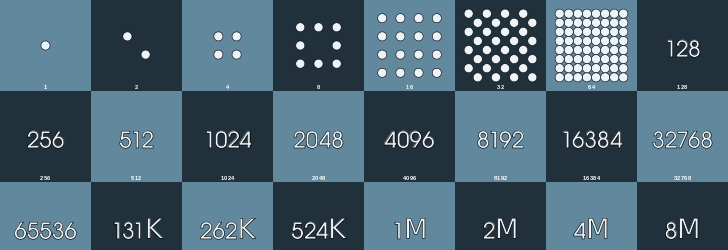
Procsilas Moscas' number grid pictureYes, the methods of mental feats are very important step in mastering them, which is why I spend so much time on them.

However, once you have the method down, how you bring that ability to an audience in an entertaining way? In today's post, we'll show you a few performers who take these feats to that all-important next level.

Our first performer is Gerry McCambridge, doing the Knight's Tour in his TV show, The Mentalist. Note the importance he pays not only to the feat itself, but with making sure that everyone understands the challenge and the difficulty.


With chess, people already have a preconceived notion of intelligence and difficulty being involved. What about if you're doing a magic square, a feat which boils down to putting down numbers, then repeatedly adding them up? If you can make that entertaining, that's impressive. If you can bring an audience to a standing ovation with it, you know you've really got something!


We'll wrap this post up with a rare US TV appearance late Shakuntala Devi. She was a woman from India known for her mental calculation skills. In Ricky Jay's TV special, Learned Pigs And Fireproof Women, she does root extractions in an extraordinarily fast and impressive manner. For you poker fans, that young man on the computer is probably better known to you as Chris “Jesus” Ferguson.


The whole point of this post, of course, is not to get you to copy these performances directly, but to inspire you to think of what unique and different qualities you can bring to your own performances.

0

Keeping Your Rights at Hand

Published on Thursday, May 16, 2013 in , , , ,

Mdgilkison's We The People graphicBack in 2009, I spent a few posts examining mnemonics relating to the US Constitution.

I'm always lookout for better and more effective ways to remember things like this, so here's my latest discovery.

The original posts cover amendments 1-9 in one post, amendments 10-18 in another, and amendments 19-27 in the final one.

About 2 years ago, I posted Ron White's method of memorizing the Bill of Rights using parts of your body from the top of your head, down to the bottom of your feet:


I just ran across a new Bill of Rights mnemonic video recently. Instead of using the whole body, this one uses various hand arrangements involving 1 to 10 fingers for each of the corresponding amendments:


Some of the hand arrangements need some further explanation.

For the 4th amendment, prevention of unreasonable search and seizure, the 4 fingers are wrapped around the thumb just as you would if you were a police officer knocking on a door with a warrant.

The 9th amendment refers to rights not specifically mentioned in the Constitution. When you're holding 9 fingers out, one thumb is hidden, but everyone know it's still there, just like the rights that aren't mentioned.

For more information on memorizing the US constitution, check out the US Constitution section of the Memorize United States of America Facts post over in the Mental Gym.

0

Even More Quick Snippets

Published on Sunday, May 12, 2013 in , , , , , , , ,

Luc Viatour's plasma lamp pictureThose of you in the US are probably spending Mother's Day honoring your mom, so I'll just sneak a wide variety of snippets in today, and you can check them out later.

• Jan Van Koningsveld, along with Robert Fountain, has released a new book that will be of interest to Grey Matters readers, titled, The Mental Calculator's Handbook (Amazon link). If you're not familiar with Jan Van Koningsveld, he was able to identify the day of the week for 78 dates in 1 minute at the World Memoriad. I haven't had a chance to read this book myself yet, but his reputation does suggest the book is worthwhile.

• Starting back in 2008, I kept track of assorted online timed quizzes, the type of quizzes that ask you how many Xs you can name in Y minutes. I found these so fun, useful, and challenging, I even developed my own timed quiz generator, and even posted several original timed quizzes created with it. However, sporcle.com, home to numerous timed quizzes (despite starting out as a sports forecasting site) has gone and outdone this. Not only can you create your own timed quizzes, you can also embed them on your own site now! Find a quiz you like, for example, this landlocked states quiz, go down to the info box below the quiz, and click on Embed Quiz. A pop-up will ask whether you want a wide or narrow window (minimum width is 580 pixels), and you will be given the proper embed code, which can be used in a manner similar to YouTube embed codes.

• For those of you who do the Fitch-Cheney card trick, as taught on Scam School or YouTube, Larry Franklin has posted a simple tutorial on using Excel to practice this routine. As long as you understand your favorite spreadsheet program well enough, it's also not hard to adapt. It will take a while to create in the first place, but once it's ready, it's fairly easy to use.

• One of the most useful card memory feats to learn is memorizing basic blackjack strategy. Over in reddit's LearnUselessTalents section, user Tommy_TSW posted an interesting approach for memorizing this using your favorite video game, movie, or TV characters. Basically, you create a battle scenario for every possible situation, and when the various cards come up, you simply recall the corresponding battle (and result). Depending on the particular variation of blackjack you're playing, basic strategy can change, so you might want to calculate the right moves using basic strategy calculators at places like Wizard of Odds or Online-Casinos.

Fans of the game Nim will enjoy this online version, playable even on all mobile devices. It's standard Nim, meaning that the last person to remove a card is the winner. It's simple, straightforward, and a good way to practice solo.

0

YouTublerone's Memory Technique Videos

Published on Sunday, May 05, 2013 in , , ,

Normal brain scanOne of the basic, yet most useful, of all memory techniques is the Major System, a method of turning numbers into easily-recalled images.

While there is a bit of practice involved when initially learning it, once you have the system down, it's quite easy to use. I always keep an eye out for new tutorials on the Major System, and I've just found a new video series that teaches it quite well.

The series was recently posted by YouTube user WatchYouTublerone. First, he starts with the basic building blocks of the Major System:


There are several videos which follow this basic videos, each of which teach a group of 10 images built from the basics of the Major System. For example, here's the video for images from 0 to 9:


I've added all of these videos to the Major System YouTube playlist. In addition, there's also a special video for the numbers 00-09, for use as the ending numbers of 3 or more digit numbers, such as 100, 101, and so on.

Once you've got these basics down, WatchYouTublerone then teaches how to expand the Major System by combining it with the Memory Palace System:


I've added this video to the Loci/Journey/Roman Room playlist, where you can learn more about this technique.

Try learning these techniques, and then explore the rest of this Grey Matters site for an astounding number of uses for it!

0

The Mystery of 24

Published on Thursday, May 02, 2013 in , ,

Ianmacm's number pictureThe other day, I ran across an unusual mathematical fact which I had never encountered before.

Take any prime number that's equal to or greater than 5, square it (multiply it by itself), and then subtract 1. The result will always be evenly divisible by 24! Now for the hard part: Why does that always work?

Let's take a look at closer at this with our favorite computational knowledge engine. Wolfram|Alpha accepts the command prime[x], in which x is any whole number, and the prime command returns the xth prime number. For example, prime[1] returns 2, because 2 is the 1t prime number. Prime[2] returns 3, prime[3] returns 5, and so on.

We'll have Wolfram|Alpha take the 3rd through the 13th prime number, square each of them, subtract 1, and then divide by 24. Sure enough, every one of those is evenly divisibly by 24!

To find out why this happens, we need to break the problem down into its basic parts.

Squaring and subtracting 1: The first step in the problem, of course, is squaring and then subtracting 1. The mathematical way to write this is x2 - 1. Not only can this be factored, but it happens to be a very standard and simple problem known as factoring the difference of 2 squares.

Working this particular problem out, we get: x2 - 1 = (x + 1)(x - 1). In plain English, squaring any number x and subtracting 1 is the same as multiplying a number 1 greater than x by a number 1 less than x. As a practical example, 62 - 1 = 36 - 1 = 35. Our factoring tells us we should be able to get the same answer by multiplying (6 + 1)(6 - 1) = (7)(5) = 35, so sure enough, that works!

Regular Grey Matters readers will recognize this principle from the Squaring 2-Digit Numbers Mentally tutorial in the Mental Gym.

Now that we've established that squaring a number and subtracting 1 is the same a multiplying the two numbers immediately above and below that number, it's time to examine the other parts of this problem.

Using odd numbers: Every prime number equal to or greater than 5 will be an odd number, of course. What happens as a result of starting with odd numbers?

When taking the numbers immediately above and below any whole odd number, you're naturally going to wind up with 2 even numbers with a difference of 2. If you start with 15, then you'll effectively be multiplying 14 by 16. Starting with 17 results in multiplying 16 by 18, and starting with 19 results in 18 by 20.

With 2 even numbers, it shouldn't be surprising that x2 - 1 will result in a number evenly divisible by 4. But if we take a closer look, there's something even more interesting to discover.

Every other multiple of 2 is also a multiple of 4. So, when you're multiplying any 2 even numbers with a difference of 2, you're always multiplying a multiple of 4 by a multiple of 2.

In other words, when starting with any odd number as x, and running it through the formula x2 - 1, you'll always wind up with a number which is evenly divisible by 8!

That may explain the 8, but 24 ÷ 8 = 3. Why does running prime numbers through x2 - 1 result in numbers divisible by 3, as well?

Using prime numbers: When considering any group of 3 consecutive whole numbers, exactly 1 of those numbers must be a multiple of 3. With 15, we're considering the numbers 14, 15, and 16, for example, and 15 is the only one of those which is divisible by 15.

However, when we limit our choice for x to prime numbers equal to or greater than 5, we're guaranteeing that our odd number itself will not be a multiple of 3. If it were, it wouldn't be a prime number by definition.

That means when we deal with the numbers immediately above and below a prime number, one of those even numbers must be a multiple of 3. Starting from 17, we're multiplying 16 by 18, and 18 is the multiple of 3. With 19, we're multiply 18 by 20, and with 23, we're multiplying 22 by 24.

Choosing prime numbers effectively forces us to multiply a multiple of 4 by a multiple of 2, and also requires that one of those even numbers be multiple of 3.

What the problem really boils down to is the request to choose any odd number x which isn't a multiple of 3, multiply (x + 1)(x - 1), and the result will always divisible by 24 for the reasons I've detailed above.

Since prime numbers equal to or greater than 5 all fit this definition, they will all work. The trick is that there are other odd numbers which will work, as well.

49, for example, isn't a prime number, yet it's still an odd number which isn't a multiple of 3. (492 - 1)= (49 + 1)(49 - 1) = (50)(48) = 2400, and even without a calculator handy, I'm pretty sure that's evenly divisible by 24.

Sometimes, it's fun just to wander through the forest of mathematics, and discover treasures like this.

0

Quick and Hand-y Mnemonics

Published on Sunday, April 28, 2013 in , , , , , ,

Tijmen Stam's knuckle and month mnemonic imageMany of the memory feats I teach require plenty of practice.

Today's mnemonics however, are short and sweet, and so they don't require much practice. As a bonus, they're all based on something you always have handy - your hand!

This first mnemonic is probably familiar to you already. It's a way of using your knuckles to recall the lengths of each month.

Make two closed fists, and put them together so you're looking at the back of your hands, with the sides of your first fingers touching each other, as in the illustration below. As you can see, all the months located on knuckles have 31 days, and all the months located between knuckles are only 30 days long, or shorter in the case of February.

Tijmen Stam's knuckle and month mnemonic image

A similar, yet less well-known mnemonic, uses a piano keyboard. Starting on the F key as January, continuing with the F# (F sharp) key as February, and so on, ending with December on the E key, all the months represented by white keys will have 31 days, while all the months represented by black keys have 30 or fewer days.

Arent's Piano keyboard image

Next, we move from the knuckles to the pad at the base of your thumb, which can be used, surprisingly, to tell you how a steak feels at various cooking levels. The graphic below explains this simply:

Thumb pad steak mnemonic image

Using hands for mnemonics is hardly a new idea. In fact, many of the imperial measurements, such as inches, feet, yards, and miles, were originally based on measurements of various parts of the body. In fact, knowing the exact measurements of various parts of your own particular body (assuming you're not still growing) can be very helpful in making accurate measurements without a rule. On Quora, Peter Baskerville explains which measurements are the most useful to know.

Back in the days when few people went any further from their home in their lifetime than 7 miles, basing the measurements on one's own body was the quick and simple. As wider travel and communication became possible, this caused some confusion, as in the classic cautionary tale about the Queen's bed:


The last hand mnemonic I'll mention requires a more practice and a better understanding of trigonometry than the others. When calculating special angles in the unit circle, it's possible to use your hands for quick and accurate calculations for sine, cosine, and even tangent:


The video above only covers the 1st quadrant (the upper right quadrant) of the unit circle, but I expanded on this system to cover the full 360° circle in a post 2 years ago.

It's truly amazing how much knowledge you can keep at the tip of your fingers with a little practice, isn't it?

0

Wizard Government Zulu

Published on Thursday, April 25, 2013 in , , , , , ,

Shreyas Patil's photo of playing cardsThere's an old magic trick out there that's been in the public domain for so long, its origins seem to have been lost.

In the classic version of the trick, a card is chosen, and a mysterious person is called. Somehow, this person is able to name the correct card, despite not even being in the same room, or even the same state or country!

Magicians know this trick as “The Wizard”, as most of them learned the version by that name from the book, Scarne on Card Tricks. You can read that particular trick for free online (page 42, page 43).

As with many tricks, the presentations grow and change over the years. Some magicians also know this same trick as “The Phantom” or some other equally mystic name. When Scam School taught this routine (YouTube link), their figure of choice was a secret member of a government conspiracy:


If you think about it, any bit of data which can be identified by two simple pieces of information, in a manner similar to grid coordinates, can be coded in a similar fashion. It's quite obvious that playing cards can be broken down into 2 bits of information, their value (Ace through King) and their suit (clubs, hearts, spades, diamonds). What if the data to be coded didn't have 2 such obvious factors? If we could manage that, this routine could be even more deceptive!

Max Maven developed a version called “Remote Pager” in which a word is chosen from the following old letter

Impossible, but true! A demonstration of intuition, custom tailored for you by Mister Zulu. Cnoose any word in the paragraph of at least four letters. After you choose a word, contact me by phone. Believe it or not, I'll announce the word you are thinking of! Imagine tne surprise ~ but be on guard: I presume my demonstration is going to haunt you...

Mister Zulu
How would you even begin to code the chosen word? Even being familiar with the above methods, the particular coding isn't easy to work out here.

If you can't figure it out for yourself, Word Ways magazine wrote up “Remote Pager” here, complete with the explanation. As with all of Max Maven's routines, the approach is subtle and ingenious.

Play around with this routine, which is even more portable now thanks to smartphones. If you have any fun stories of performing this, I'd love to hear about them in the comments!

0

Grasping Infinity

Published on Sunday, April 21, 2013 in , , ,

Karl-Ludwig Poggemann's stairwell photoWhen you're just starting out in mathematics, infinity is little more than a neat concept.

Infinity, at that point, is simply the idea that numbers go on forever, and once you accept that, you seem to be fine with the concept of infinity. As you learn more about math, though, you start running into more and more problems relating to infinity, and the concept starts to get weird.

David Hilbert came up with a wonderful example that helps people begin to grasp unusual concepts concerning infinity. His example is known as Hotel Infinity, and is explained here by Martin Gardner, with some clear and amusing illustrations.

Imagine a hotel with an infinite number of rooms (especially easy if, like me, you live in Las Vegas). Also, imagine that an infinite number of people are staying there, so every room is occupied. What happens when 1 person, a UFO pilot in Martin Gardner's version, wants a room? Everybody can be moved to a room number that's 1 higher than their current room, so the first room is now available for the UFO pilot.

Similarly, if 5 couples show up, everyone can be moved to a room number that's 5 higher than their current room, so five rooms are now available for the new couples.

Let's make this more challenging: What happens if an infinite number of people now want a room? You can't simply have everybody move to a room number that's infinitely higher than their current room, so how would you solve this problem?

The answer is surprisingly simple. Have everybody move to a room number that's twice as big as their current room number! Now, the infinite number of previous guests are all staying in even numbered rooms, and the infinite number of new guests can now move into the odd-numbered rooms! Since there are an infinite number of even numbers and odd numbers, this works.

In the late 19th and early 20th centuries, Georg Cantor started talking about different sizes of infinities in a manner similar to this, and even the great mathematical minds of the time scoffed. Eventually, however, mathematicians did come to accept this idea. How exactly can there be different sizes of infinities? You can learn more about this unusual concept in a basic way via Martin Gardner's Ladder of Alephs article. Videos from TED-Ed and Numberphile examine this concept in more detail.

Even though such discoveries about infinity are relatively new, even the ancient Greeks understood the importance of analyzing infinity. Zeno of Elea developed several paradoxes involving infinity which still challenge mathematicians today. TED-Ed's video below explains the Dichotomy paradox:


A video from Numberphile discusses both the Dichotomy paradox and the Achilles and the Tortoise paradox, and how they relate to infinity:


Not that Hilbert's Hotel Infinity thought experiment even makes this clear. It's even a little startling to realize that it can help you reduce this to a simple algebra problem.

In BetterExplained.com's newest post, An Intuitive Introduction to Limits, these odd ideas about infinity help you understand the concept of limits in calculus. The introduction sums up the challenge perfectly: “Limits, the Foundations Of Calculus, seem so artificial and weasely: “Let x approach 0, but not get there, yet we’ll act like it’s there… ” Ugh. Here’s how I learned to enjoy them:” Concrete examples, including a buffering soccer video, make even this odd concept clear.

If you grasped limits from that article, you're probably ready for the concept of an infinite series, explained in detail in this 15-minute video from WhyU. It's amazing how a little knowledge of infinity can quickly take you through such advanced concepts.

If you're confused by the infinite series video, take some time and go back through the earlier concepts of infinity to make sure you understand them. Start by reading the first half of this post, followed by the next quarter of this post, then the next eighth of the post, then the next sixteenth...