2

Reader's Digest's Memory Tricks

Published on Sunday, February 17, 2008 in , , , , , ,

Reader's DigestThe cover story of the March 2008 issue of Reader's Digest is an article featuring 20 quick tips to improve your memory!

The article itself, available for free online, is titled Retrain Your Brain: 20 Memory Techniques You'll Never Forget. These are some great, simple ideas you can use to remember things like people's names, where you left your glasses, to-do lists, website passwords, and words that are on the tip of your tongue.

The advice in the article comes from several well-known memory experts and authors, including Harry Lorayne (author of Ageless Memory: Secrets for Keeping Yourever Mind Young Forever), Gini Scott (author of 30 Days to a More Powerful Memory) and Carol Vorderman (author of Super Brain: 101 Easy Ways to a More Agile Mind). Who Remembers What? is an interesting sidebar article about the different nature of men's and women's memories.

In the past, Reader's Digest featured many other great articles on memory that are still available on their site. Beyond just standard memory techniques, there are some great ideas in Improve and Maintain Your Memory: 27 tricks to keep your brain in shape, such as listening to a book as you exercise, or snacking on grapes instead of cookies (yes, this really does help your memory!). Having trouble remembering people's names? Check out January 20008's article What's Your Name Again?.

If you prefer challenging your memory to just learning about it, try Memory Master. In this game, you're shown several pictures for a brief time. After that, you're shown twice as many pictures, and you have to remember which objects you were originally shown.

That's all for today's entry. Granted, this isn't one of my longer posts, but I figured that wouldn't be appropriate for an article about Reader's Digest.

2

Mathematical Mystery Tour

Published on Thursday, February 14, 2008 in , , ,

BrainWhen you watch your favorite crime drama, what is happening? Yes, of course, they're trying to catch the murderer, but do they just follow the evidence to the criminal, and end with their answer? No, usually they're looking not only to find the murderer, but to understand the events and evidence that led to the motive, the means and the opportunity.

Mathematics is very similar to this in many respects. Mathematics seeks to understand relationships in a precise a manner as possible, and seeks not just the answers themselves, but an understanding of the answers. Just like any good crime drama, this search has led to a few places that seem to be dead ends, but actually open up new directions of study.

Back in 1985, the PBS program NOVA focused on the history of these mathematical brick walls, in a program called Mathematical Mystery Tour. It's just under 54 minutes long, and is presented in 8 parts below (just click the right arrow to go to the next part). It's a fascinating look at the challenges that mathematicians have faced and even some that they still face.


This special doesn't have time to go into too much detail on many of its subjects, so I'm including some links below where you can go for a closer look:

* Better Explained (Two especially relevant articles are How to Develop a Mindset for Math and A Quirky Introduction To Number Systems)

* Euclid's Elements

* Fermat's Last Theorem (video on how it was finally solved in 1994)

* Imagining The Tenth Dimension (with YouTube link)

* Millenium Problems (unsolved mathematical problems)

15

10 Flashcard Programs . . . For Free!

Published on Sunday, February 10, 2008 in , ,

BrainAbout a year ago, I pondered whether free flashcard memorization would be the killer app of 2007. OK, it wasn't the killer app of 2007, but there was plenty of development in that field. Since it's been a year, I figured now was a great time for an update on the free flashcard scene.

All the programs and sitess I list below employ the idea of spaced repetition that was first developed by Sebastian Leitner, which helps lock in the information for the long term.

Anki: This offline program is made to run on Windows, Mac OS X and Debian, with the Linux source code available. It's easy to add and edit cards, and it even charts your progress!

DingsBums: A Java-based offline, program, this unusually-named flashcard program is flexible and easy to use!

Flashcard Exchange: This is a huge site with over 6 million flashcards already. While it is free, if you pay an additional fee, it will employ Leitner's spaced-repetition.

Flashcard Friends: What do you get when you cross MySpace or Facebook with a flashcard site? This!

Fresh Memory: This is an offline, platform-independent program. You can not only test your knowledge via flashcards, but via multiple choice questions, as well.

Mnemosyne: Named after the Greek goddess of memory, this offline program that runs on Windows, Linux and Mac OS X will support graphics, unicode (great for learning languages like Japanese or Arabic!), LaTeX (for mathematical formulas) and even three-sided cards!

Rememberize: This is a very straightforward flashcard site. There's few frills, but it will help you learn. There's a great tour of the site to help get you familiar with it.

Study Cell: If you have a Java-enabled cell phone, you can create quizzes and flashcards that will let you test yourself on the go!

Study Tag: On this free site, you organize facts into lessons, and lessons into complete courses. The best way to get an idea of this site is to take its free 6-part introductory course.

You Know The Drill: This is a free flashcard website that will allow you to quiz yourself on any type of information, but has tools specially geared towards languages.

If you're interested in more information on free flashcard software, check out my previous articles, Quizlet, 10 Online Memory Tools...For Free!, Review: Ebbinghaus 1.5 (Mac OS X), Create Free Flashcards and Quizzes, Free Flashcards Galore! and New Features at ProProfs!.

0

Messing With Pi

Published on Thursday, February 07, 2008 in , , , ,

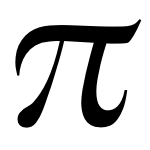
PiDid you ever receive that e-mail that claims that some state's legislature (usually Alabama) has recently passed a law redefining Pi? As Snopes notes, this is false. However, 111 years ago this week, the Indiana state legislature came very close to doing just that.

The change wasn't done to make Pi consistent with the Bible, but rather to deal with the age-old problem of trying to construct a square with the same area as a given circle, otherwise known as squaring the circle. Because Pi is transcendental, we now know that this is impossible.

However, what if you were working before the 19th century, before this was proved, and before calculus? There are numerous ways to get very, very close to the circle, and it's not unreasonable to think that just a few more adjustments would be needed to perfect the process. Let me show you how the madness takes hold. One of the best approaches I've found for seemingly squaring the circle was detailed by Stu Savory in April, 2005 (26 days too late if you ask me). He does a good job explaining, but I'd like to break it down a little differently for my readers. It uses only a compass and a straightedge.


We start by working on the line that will become the circle's diameter. Draw a horizontal line, and mark the rightmost end as R. Open the compass to a width of an inch or so, place the spike of the compass at R, and mark point T on the line to the left of R. Now place the spike on T, and mark a point to the left of T (not labeled). Place the spike on this unlabeled point, and mark one more point to its left, which will be labeled O. In short, OT should be exactly twice as long as RT.

Now, open your compass to length OR, with the spike at O. Use the compass to draw a circle. Mark as P the point where the horizontal line intersects with the circle on the left. Our final step concerning the diameter line itself (POR) is to bisect OP (Java required), marking OP's midpoint as H.

Next, we're going to make some measurements above POR. Construct a vertical line from point T. Mark the point at which this line intersects the circle as Q. Using the same length as QT, draw a chord starting at R. Mark the other end of this chord as S (length of QT=length of RS). Draw a line from S to P. Construct a line parallel to RS through point T (Java required), marking the point where it intersects SP as N. then construct another line parallel to RS through point O, marking the point where it intersects SP as M.

Finally, we're going to work below PQR, and get our square's base measurement. Set your compass open to length PM, with the spike at P. Swing the compass to mark the point K, below POR, on the circle's circumference, and draw the PK chord (PK=PM). Set your compass to the length of MN, and then construct a tangent at a right angle to POR, marking the bottom-most point of this tangent as L. Draw lines RL, RK and KL. Finally, construct a line parallel to LK, going through point C. Mark as D the point where this line intersects RL.

So what does this give us? RD is the base of our square we need. Let's work through this next part slowly.

The formula for the area of the circle, as we all learned in school, is Pi * r2. The formula for a square with a base of x is x2. Because of the way in which these measurements were done, RD will always be a straight line about 1.772453 times longer than RO, the circle's radius. As it happens, this is the square root of Pi!

In other words, the length of line RD equals the circle's radius times the square root of Pi ((sqrt(pi))*r). Using RD as the base of a square, we can get the square's area by multiplying this by itself! Squaring the square root of Pi gives us Pi, of course, and squaring r gives us r2, or Pi * r2 for the area of this square!

Everything seems right, but can you figure out why this isn't a true squaring of the circle? What actually winds up happening is that RD is the square root of 355/113, a common rational fraction used for Pi early on. 355/113=3.1415929204, which is accurate to 6 places after the decimal point! It's square root is 1.7724539262, which also accurate to 6 places after the decimal point. This gives a square and a circle that are so close in area that, using a pencil that could mark in 1/100 of an inch, you would have to create a circle more than 4 miles in diameter to see your error!

If you look at the bottom of Stu Savory's blog entry, he has a quicker and more interesting way of apparently squaring the circle with a compass, straightedge and a coin!

Are you beginning to see why so many people were obsessed with squaring the circle? When you don't know that Pi goes on forever, it seems to be a matter of just making a few more adjustments to make a historical mathematical breakthrough! This was actually so common that, at one point, the insane belief that one could square a circle was listed in medical texts as morbidus cyclometricus!

I hope you've enjoyed this rather odd look at a weird bit of mathematical history.

0

New iPhone/iPod Touch Games

Published on Sunday, February 03, 2008 in , , , , ,

iPhoneiPod TouchI have good news for owners of the iPhone and/or the iPod Touch. I've just doubled the size of the iPhone/iPod Touch Mental Gym!

In addition to the four challenges that were already there, four new brain-bending games have been added:

* 15 Puzzle: While there have been several versions of the 15 puzzle made for the iPhone, this is the first one I've found that both employs the classic numbered squares, and will properly scramble the puzzle for you. This makes it the perfect tool, not only for learning to solve this classic puzzle, but also for learning how to arrange a magic square on it, as in my video.

* Calc10: This is one of those games that's so simple, it proves surprisingly addictive. In this game, you're given four random numbers from 0-9, the four basic arithmetic operators (addition, subtraction, multiplication and division) and a memory function. Using each of the four numbers only once, and finishing with the memory function empty, you must figure out how to arrive at a total of 10 as quickly as you can. Sometimes, this is very easy, such as when you get the numbers 0, 8, 7 and 2. Here, you would simply hit 7 * 0, giving 0, then add 8 and add 2, resulting in 10. It can be get much harder, though, like the time I got the numbers 9, 6, 6 and 9. Can you make 10 out of that (remember, you must use all four numbers)? There's a reset function, which clears the calcuator and gives you back all your numbers, but doesn't reset the clock. Finally, the solution function can be used when you can't solve the puzzle. This is also very helpful in teaching you approaches you may not have previously considered.

* Lights Off: As you might guess from the name, this is a version of the puzzle best known as Lights Out. Any time you press a lighted button, it will turn off, and pressing a dark button will light it. The object is to turn off all the lights on the board, which would be simple if it weren't for the fact that touching any button will not only flip its own state, but that of the buttons directly above it, below it, to its right and to its left. Ideally, you want to shut all the lights off in under 15 moves. You can learn to do this in two steps, first by learning how to solve the puzzle, then by learning how to solve it in the minimum number of moves.

* Peggy: This is the classic Peg Solitaire game, played on the classic English board. The only way to move a peg is by jumping over another peg that it directly above it, below it, to its right or to its left into an empty space. When a peg is jumped, that peg is removed from the board. The challenge is to finish with only one peg left on the board, ideally in the same space that was initially left empty. While Wikipedia lists many great peg solitaire links, I would particularly like to draw your attention to George Bell's Peg Solitaire Page, for those who want to understand more about the game itself.

Please take some time to play and enjoy these games, and let me know if you other suggestions for the iPhone/iPod Touch Mental Gym.

Oh, and for those of you wondering about my 9, 6, 6, 9 challenge from the Calc10 section, here's the solution. First, you would click on 6, then divide it by 9, giving an answer of 2/3. This is stored in the memory function. Next, you add 6 + 9, which is 15. Now, you hit the multiplication button and memory. This is 15 times 2/3, which is 10!

2

Shakespearean Mnemonics: Comedies

Published on Thursday, January 31, 2008 in , , , ,

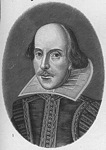
William ShakespeareIf you've been practicing your Shakespearean histories and tragedies, you already know more than half of his plays! In this final installment, you'll learn to memorize all the comedies.

The 16 Shakespearean comedies are The Tempest, The Two Gentlemen of Verona, The Merry Wives of Windsor, Measure for Measure, The Comedy of Errors, Much Ado About Nothing, Love's Labour's Lost, A Midsummer Night's Dream, The Merchant of Venice, As You Like It, The Taming of the Shrew, All's Well That Ends Well, Twelfth Night, The Winter's Tale, Pericles, and The Two Noble Kinsmen. We'll use the same technique as was used in memorizing the tragedies.

When we last left our story, a leering king had landed at the feet of Antony and Cleopatra, who hit him down into a cymbal line, which should make you think of King Lear, Antony and Cleopatra and Cymbeline. It is from the cymbal that we will continue our rather weird story mnemonic for the comedies.

When the cymbal is picked up, we magically find a full cabinet-size arcade version of Tempest under it! To help make this image more memorable, make sure you have Java installed, and try out the video game for yourself.

Imagine that this Tempest video game is being played by two men dressed like they do at a Renaissance fair. These men are two gentlemen of Verona, and are endlessly pumping quarters into the video game. However, their wives, who are in Windsor Castle in similar dress, leave there to tell their husbands that video game time is up, laughing the whole time. These ladies would, of course, be the merry wives of Windsor.

The two gentlemen and their merry wives leave the arcade, and go to Love and Love Tailors (you'll see where this name comes in later) to get a new suit tailored for them. They go in, and both tailors start taking all the measurements possible, and writing them down measure for measure. Unfortunately, these two guys aren't very good tailors. They keep making one sleeve or pant leg too long, and mixing up the measurements. Initially, these mistakes seem like a Comedy of Errors, but our two gentlemen begin to get upset at these repeated mistakes.

The gentlemen and their wives leave the place without a tailored suit, making the visit prove to be much ado about nothing. Remember that they were called Love and Love Tailors? Despite all that bad work they did, they didn't make a sale, meaning that this was Love's Labours Lost. As the two couples leave, still dreaming of new suits, they realize it is a nice midsummer night. They continue to think about their suits as a midsummer night's dream, and finally decide to go someplace else.

At this point, we're halfway through the comedies, so it's a good time to review. What was under the cymbal? The Tempest video game. Who was playing it? Two Gentlemen of Verona. Who picked them up? The Merry Wives of Windsor. What did the tailors first do? Examine them Measure For Measure. How did it work out? It was a Comedy of Errors, turning into Much Ado About Nothing, resulting in Love's Labours Lost. What did the couples do after they left? Pondered their Midsummer Night's Dream.

The couples finally get an idea of where else to go, jump in the nearest canal, and swim to the Merchant of Venice (so, at this point, they really would need those new suits). This merchant makes the new suits right the first time, mentioning that the suit is just as you like it.

As they come out, we can now see that the couples are Petruchio and Kate, along with Lucentio and Bianca, from Taming of the Shrew. If you're not familiar with these characters from the play already, I can guarantee you'll never forget them after watching the Atomic Shakespeare episode of Moonlighting. Imagining Bruce Willis, Cybil Shepherd, Curtis Armstrong and Allyce Beasley as these characters will really make this image stand out!

As the Taming of the Shrew characters are finally ready for their night out, an accident happens - they all fall into a deep well! They can't get out, and the first night passes with no one coming by to help them. More nights pass, also with no one coming by. They nervously joke that all's well that ends (in the) well. Fortunately, they're saved on the twelfth night.

They're saved by none other than the Winter Warlock (or the reformed Winter Warlock, if you prefer). He mentions that he checks the well every so often, especially after what happened before. When they ask what happened before, he tells them a winter's tale. He explains that Pericles once fell in there, and was also stuck until the Twelfth Night (I repeat this part just to reinforce that play). He was finally rescued by two noble kinsmen.

Time for one last review! What was under the cymbal? Tempest, which is being played by . . . Two Gentlemen of Verona, who are married to The Merry Wives of Windsor. They go to the tailor, who takes things down Measure For Measure, and get involved in a Comedy of Errors, and this work eventually proves to be Much Ado About Nothing, resulting in Love's Labours Lost. The couple leaves with little more than A Midsummer Night's Dream, which makes them turn to The Merchant of Venice, who makes the suit As You Like It.

They come out dressed as the cast of Taming of the Shrew, ready for a night out, but they fall into a well, nervously joking that All's Well That Ends Well. They're rescued on the Twelfth Night, and learn from A Winter's Tale that this happened before to Pericles, who was rescued by The Two Noble Kinsmen.

If you practice and review that rather strange story a few times, you'll have all the Shakespearean comedies memorized! Combined with your knowledge of the tragedies and histories, you should now have the name of every Shakespeare play memorized! You should be able to get all 38 plays from the Shakespeare Quiz now!

Here are a few details I'd like to include before winding this series up. The First Folio of Shakespeare did not include the last two comedied, Pericles and The Two Noble Kinsmen. Also, memorizing this list can be an excellent starting point for learning more about Shakespeare and his plays. Now you know the names, what else can you learn about them? Why are William Shakespeare's plays so highly regarded, anyway? You're in for a great voyage of discovery, if you choose to take it.

I hope you've enjoyed this series, and found it useful and inspiring!

0

Shakespearean Mnemonics: Tragedies

Published on Sunday, January 27, 2008 in , , , ,

William ShakespeareHave you been practicing the Shakespearean histories? Once you're comfortable with those, you're ready to move on to the tragedies. The histories were remembered with a systematic method, but the tragedies will require a different approach.

The 12 tragedies are, in the order they appear in the First Folio of Shakespeare, Troilus and Cressida, Coriolanus, Titus Andronicus, Romeo and Juliet, Timon of Athens, Julius Caesar, Macbeth, Hamlet, King Lear, Othello, Antony and Cleopatra, and Cymbeline. To remember this list, we'll be using the Link and Story systems.

First up is Troilus and Cressida. This can be made easier to remember by picturing Star Trek's Deanna Troi driving a Toyota Cressida. You could also picture her visiting the moon of Uranus, or performing with the progressive rock band, but the futuristic nature of Deanna Troi combined with a car from the past helps make the image more ridiculous and memorable.

For Coriolanus, you could picture the Roman general, but not everyone is familiar with him. As an alternative, you might use Cornholio, the classic Beavis and Butthead character (may not be suitable for some teens and pre-teens). So, you're picturing Deanna Troi driving an old Toyota Cressida (Troilus and Cressida), when she has to slam on the brakes to avoid running over Cornholio (Coriolanus).

Next, is Titus Andronicus. I use another Star Trek image here, that of Data, who is an android that comes across as somewhat uptight. After avoiding Cornholio, Troi drives her Cressida on to pick up this uptight android (or, in my imaginary version of Latin, Titus Andronicus!). They drive off to perform together in the title roles of Romeo and Juliet (Perhaps produced by Beverly Crusher?).

Note that I don't use a substitute image for Romeo and Juliet, since the play is well-known enough that characters and images from the play easily come to mind. Already, you should have linked Troilus and Cressida to Coriolanus to Titus Andronicus to Romeo and Juliet. You're already a third of the way there!

As Trio and Data are rehearsing a romantic embrace from Romeo and Juliet, they are interrupted by Timon from The Lion King, who is wearing a toga. When asked who he is, he replies that he is Timon of Athens! Timon says he is here to hide them from Julius Caesar, who is looking for them (Hey, if you can't trust a guy wearing a toga about Julius Caesar . . .)!

Timon drags Troi and Data into the only place handy, a giant model of a Macintosh Computer that is running iTunes, which is playing the video for Beth. In other words, they're hiding in a giant Mac/Beth unit. However, just as the video ends, Julius Caesar figures out where they are, and uses a small pig, not a full ham but rather a ham-lette, to pull them out.

Are you still imagining this bizarre story in your mind? You should by now be able to remember Troilus and Cressida, Coriolanus, Titus Andronicus, Romeo and Juliet, Timon of Athens, Julius Caesar, Macbeth, and Hamlet. Only 4 more images to go, and you'll be able to recall all 12 Shakespearean tragedies!

As the ham-lette pulls Troi, Timon and Data out and hands them over to Julius Caesar, he turns around to give them to a king (King Arthur? Elvis, the King of Rock and Roll? King of Diamonds? You choose!), who leers at them in a menacing manner. To escape this king's leer, the three of them throw an Othello board and pieces at him, and run out of the room. The king finds that the Othello board and pieces are sticking to him, as if glued.

He dives into the Mediterranean Sea (Why not? After all, we've been dealing with Timon of Athens and Julius Caesar of Rome). The Mediterranean proves too powerful, and sweeps this king all the way over to Egypt, where he washes ashore at the feet of Antony and Cleopatra. They are suspicious of this king, so they use a cymbal from a nearby set of drums, and draw a line in the Egyptian sand. As the king looks at this line, confused, Antony and Cleopatra hit him with the cymbal, making him fall right onto the cymbal line (Cymbeline).

That's all of the tragedies! Go over this story a few times to make sure you've got the images, and their associated plays (also, so you don't accidentally claim that Cornholio is a Shakespearean play).

Try a quick review right now. What was the first image? Troi driving a Cressida, representing Troilus and Cressida. Who did she almost run into? Cornholio, which should bring Coriolanus to mind! She avoids him, picks up Data, the Titus Andronicus, with whom Troi performs Romeo and Juliet. At the moment of the big kiss, Timon of Athens warns them to hide from Julius Caesar in a giant Mac/Beth unit. A ham-lette pulls them out, and takes them to a king. The three then escape from the king by throwing an Othello board at him. The Othello board and pieces stick, so this king washes them off by swimming over to Egpyt, where he runs into Antony and Cleopatra, who promptly knock him into their cymbal line (Cymbeline). Got it?

If you want to link this list to the Shakespearean histories you learned in the previous post, you might picture J. R. Henry selling the Cressida to Deanna Troi. Once you think you've got it, try the Shakespeare Quiz, and you should be able to get a score of at least 22 by naming all the histories and all the tragedies!

I'll wind up both January and the Shakespearean Mnemonics series in my next post by teaching you his 16 comedies!

1

Shakespearean Mnemonics: Histories

Published on Thursday, January 24, 2008 in , , , ,

William ShakespeareWhile playing the Shakespeare Quiz from Sporcle.com's games section, I managed to work out my own mnemonics for remembering all of his plays. Shakespeare wrote three different types of plays: histories, tragedies and comedies. I'll teach you these mnemonics over three posts, starting with this one on the histories.

The mnemonics I'll be teaching, for the most part, don't require any knowledge of the plays themselves. If you're familiar with any or all of the plays, you can embellish the mnemonics with those scenes and/or characters.

The Shakespearean histories consist of King John, Richard II, Richard III, 1 Henry IV, 2 Henry IV, Henry V, 1 Henry VI, 2 Henry VI, 3 Henry VI and Henry VIII. All those names and numbers would seem to make it difficult, but they will actually make it easier to remember!

There's only three different names to remember: John, Richard and Henry. I remember this as a name, John Richard Henry, or J. R. Henry, for short. That's simple enough, but how about the numbers?

Fortunately, there are some simple rules to remember. First, each Roman numeral, I through VIII (1 through 8), is only used once, if you consider King John to be John I. Second, the number VII (7) is never used. Now, we can move on to remembering which numbers go with which names.

We'll proceed through the names in the order we've remembered them, first John, then Richard, then Henry. John is in the first position, so there's only one John. Since he's the first, he also doesn't have a number, so just remember him as King John.

Richard is in the second position, so we can remember that there are two Richards. We already have a king for I (1), so the two Richards must be Richard II and Richard III.

All the remaining numbers, IV through VIII (4 through 8), without VII (7), are Henrys. At this point, you've got all of the histories down with a little practice. However, if you want to be more technically correct, two of the Henrys are multi-part plays. Henry IV is in 2 parts, and Henry VI is in 3 parts. This is easy to remember, as they're both even, and they both have a number of parts equal to half their respective king's number (4/2 = 2 parts, 6/2=3 parts). Just remember that Henry VIII doesn't have 4 parts.

Practice the histories a few times in your mind, and then test yourself at the Shakespeare Quiz when you think you've got it. In my next post, I'll teach the tragedies.