0

Vacation

Published on Sunday, December 27, 2009 in

Vacation beach chairsI'll be on vacation through the end of the year. Don't worry, Grey Matters will return with new posts on January 3rd, 2010!

I did arrange for some help with the Timed Quizzes post, so updates on that post will continue as normal.

In the meantime, look around the site via the menu at the top, or explore the blog entries, which go back to March of 2005, via the menu on the side. You may find something on the site you never knew about!

0

Merry Chris-maths!

Published on Thursday, December 24, 2009 in , ,

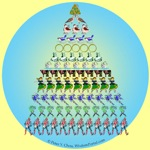
12 Days of Christmas TreeTwo years ago, just before Christmas, I examined the mathematics of The 12 Days of Christmas.

This year, singingbanana, whom you may remember from the 15 Puzzle Challenges post earlier this month, gives us a great new way to visualize triangular numbers in a very Christmasy fashion:


Of course, if you like your Christmas geekery taken to extremes, check out the Singing House of Sioux Falls, SD:


I wish you all a merry Christmas, and a happy new year!

1

Tamariz Memorized Stack (Mnemonica) Trainer

Published on Sunday, December 20, 2009 in , , , , , ,

Playing CardsGreetings, memorized deck fans! Today, we have a new treat for you.

Over at Furniture´s Card Magic Corner, Furniture has posted a new memorized deck tool called the Tamariz Memorized Stack (Mnemonica) Trainer.

It's a spreadsheet file with 3 tabs, and can be viewed online in Google Docs. The 1st tab simply holds the deck order, the 2nd tab challenges you to recall a card by its position and vice-versa. The 3rd tab is a bonus, and will help quiz you on how to cut to a particular card, in order to deliver it to a given position.

Besides using it online, you can also download it from Google Docs, and use it offline in programs like Excel or Numbers.

For those of you who use the Aronson stack, MemDeck329 has already prepared a new version for you, which is available as a zip file here. If you use a different stack, the spreadsheet is easily altered to fit your stack in the 1st tab.

If you find this useful, you'll probably also enjoy these other free online memorized deck tools.

1

Arthur Benjamin's formula for changing math education

Published on Thursday, December 17, 2009 in , , , ,

I recently sprained my arm, so I'm going to keep today's column short to minimize typing.

One of Grey Matter's favorite performers, Arthur Benjamin, returns for this post in a short, yet interesting, talk about to improve math education.

0

Mysteries of Money, Pizza and Rockets

Published on Sunday, December 13, 2009 in , , , ,

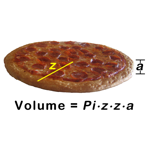
Pizza TheoremSome problem remain unsolved because they're simply so challenging. Other mysteries remain unsolved simply because they haven't bugged enough people that someone finally sits down and solves the problem. Today, we'll take a look at some interesting mysteries that have finally been solved.

Want some money? I've got a game that will guarantee you money! I have 2 envelopes that both contain money, but 1 of the envelopes contains twice as much money as the other one. You only get to keep the contents of 1 envelope, but you do get to make a choice. Just to make in more interesting, I'll let you choose either envelope, check to see how much money is inside, and then decide if you want to switch or not. If you don't switch, you keep the money in that first chosen enevelope. If you do switch, you keep the money in that 2nd envelope.

At first, this sounds like a simple variation of the Monty Hall Dilemma, but there's an important difference. In the Monty Hall Dilemma, you know the hidden contents (2 goats, 1 car). In this two-envelope challenge, you start with no knowledge of the exact contents, and then gain a partial knowledge.

The long run of this challenge has always been how to maximize your return. You could just always switch, and you'd get the larger envelope half of the time. The same thing would happen if you never switched. Yet the calculation of expected return suggests you should always switch. Earlier this year, a group of researchers from Australia actually worked out a surprisingly simple strategy for maximizing your returns in this two-envelope paradox.

Either way, you've got your money, let's go get some pizza with it! On Grey Matters, I've actually discussed pizza quite a bit, from the Pizza Theorem to using geometry in a pizza parlor to save money. Here's another challenge: How do you fairly divide a pizza?

If pizza places always divided their pizzas into exactly equal slices and always cut exactly through the center, this would be a relatively simple problem. However, whenever you get a pizza in the real world, some pieces are larger, some are smaller, and the cut isn't always through the exact center. As Yogi Berra once said, "In theory, there's no difference between theory and practice. In practice, there is."

Under these conditions, how do you divide up the pizza fairly? It would be especially handy if there were no calculations, so that the pizza doesn't get cold while you work out the answer.

The answer to this problem was found, not surprisingly, by a group of mathematics students who enjoyed hanging out in their favorite pizzeria. Study the answer well, as many pizzas were left cold in pursuit of this important information.

One mystery that got plenty of attention this week was a mysterious spiral in the sky over Norway. It appeared as a white spiral with a blue streak shooting out of the middle. The mystery was solved when it was discovered that it was a misfiring rocket launched from Russia. The video here shows how the spiral and streak occured, along with some stunning photographs of how it actually appeared.

There are still plenty of unsolved math-related problems, but have you ever noticed that the closer a problem is to our immediate interests, the more quickly it gets solved? Even the backers of the Millennium Prize realize this, which is why they attach a $1 million prize to these unsolved problems.

0

Scott Kim and the Art of Puzzles

Published on Thursday, December 10, 2009 in , , , ,

Scott Kim's TED TalkScott Kim is an eclectic mix of mathematician, puzzler, artist and too many other labels to fit within a blog post. In this post, we're going to let Scott Kim take us through his view of the art of puzzles.

Most people know Scott Kim from his Inversions (generically known as ambigrams). He's also the organizer of the Gathering For Gardner.

Scott Kim has also found a place in more recent works related to Martin Gardner, since Gardner was one of Kim's inspirations. In Puzzlers' tribute: a feast for the mind, Scott Kim provided the opening “Playful Tribute”, and an article on his work called, “Inversions: Lettering with a Mathematical Twist”. Martin Gardner effectively re-payed the tribute by writing about Kim in The colossal book of mathematics: classic puzzles, paradoxes, and problems in chapter 16, “The Amazing Creations of Scott Kim”.

Over at TED, they just posted video of a 2008 talk given by Scott Kim about his designs and puzzles, which is well worth watching:


Enjoy!

0

15 Puzzle Challenges

Published on Sunday, December 06, 2009 in , , , , , , , , ,

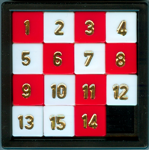
15 PuzzleYouTube user singingbanana, whose videos will interest Grey Matters readers, has just posted some interesting videos concerning the humble 15 puzzle.

If you'd like to follow along with these videos, checkout the cut-the-knot's Fifteen puzzle page (Java required) to try the puzzle out for yourself.

To learn the basics of solving 15 puzzles, see Jaap's 15 puzzle page.

The first video concern's Sam Loyd's classic 15/14 version of the puzzle. If you're using the cut-the-knot version to which I linked above, you can use the Cheat button to start from the 15/14 version to try this challenge out:


As you may have guessed by the ease with which singingbanana offers the $1,000 reward, getting to the standard solution from a position starting with the 15 and 14 switched is impossible.

The question is, why is it impossible? That's answered clearly in the follow-up video, where three challenges using the 15/14 version are added:


Can you meet these challenges? Try them out for yourself before proceeding any further.

Some of you may remember that I taught an approach to a 15 puzzle magic square a few years back, which I later demonstrated on video. However, the one I teach requires that you start from a standard 15 puzzle. If you start from the 15/14 version, as in the final challenge in the above video, you can't do it exactly as I teach.

However, if you understand the principle taught in the video, you should see how it's possible to adapt my magic square approach. Again, try it out for yourself before proceeding any further.

Here's my answer to all three challenges, and you'll see how I adapted the magic square for the 15/14 puzzle:


How did you do?

0

Yet Still More Quick Snippets

Published on Thursday, December 03, 2009 in , , , , ,

LinksDecember is here, and so are this month's snippets!

• Last month, I talked about Game Theory in Popular Culture, and linked to the final scene of The Dark Knight as one example. Over at the Quantitative Peace blog, there's an excellent full analysis of this scene as it relates to game theory.

• Richard Wiseman, whom you may remember from his Quirkology work, has released a magic app called Telepath (iTunes Link). At first, it may seem like iSensor or iForce, but the fact that your spectayor picks up the iPhone instead of you will puzzle anyone who is wise to those other methods.

• The recently-mentioned Mind Your Decisions blog had a few problems lately, as noted here and here, but they seem to be fixed now. Presh has even found time to author two new game theory posts, both featuring fictional Charlies: Brown, from Peanuts, and Eppes, from Numb3rs.

• Over at Edu-tastic, they posted a list of the Top 50 Bloggers to Help You Study, Focus and Learn Better, and Grey Matters is the first blog mentioned in the Memory and Brain Training category! Grey Matters readers should definitely check out this list, as there are many great blogs you may not have known about before that you'll probably enjoy.

0

20Q: New Idea? Hardly.

Published on Sunday, November 29, 2009 in , , , ,

20Q: Try Again?Ever played the electronic game 20Q? You think of any tangible object, and then it asks you questions. After 20 questions, often less, it guesses the object of which you're thinking.

If you've never tried the game, or even if you have, try the free online version a few times before continuing with this article.

20Q's popularity owes much to the way the game builds. You start by wondering if it will get your item correctly. As you see the questions, you sometimes wonder what it is thinking. Often, the tension builds as you get closer and closer to the 20-question limit. Finally, it either misses your object, in which case you're happy that you could beat it, or it guessed your object, and you're left wondering how it could have possibly guessed that object.

How exactly does it work? By your questions, you're basically helping the 20Q work through a search tree. Even if the device only asked 20 questions and only had YES or NO buttons, then it would be able to distinguish 220 things, for a total of 1,048,576.

When most people understand that, even just over 1 million items doesn't seem enough to cover every possible object. Consider this, however: Your average standard reference dictionary contains almost every object that is going to be thought of for this game, and most dictionaries only contain 50,000 to 100,000 entries. Even the 2nd edition of the Oxford English Dictionary, which took up 20 volumes, contained “only” 615,000 entries, which is far less than 20Q's capacity.

There are a few other tricks used, as well. First, the limitation to tangible objects: not every word in a dictionary is a tangible object. You can eliminate words like a, an, the, adjectives like blue, hard, shiny, and so on.

Also, note that 20Q doesn't absolutely limit itself to YES or NO choices. Some versions include the choices: Yes, No, Unknown, Irrelevant, Sometimes, Probably, and Doubtful. This array of choices both narrows down the available choices and helps obscure the method.

While the popular versions of 20Q have only become available within the last decade, the basic idea is much older than that. The first popular computer game to guess what you're thinking of was already making the rounds in 1976!

The game was known as “Animal”, and one of the original BASIC listings is available here: Page 1, Page 2. Notice how short the listing is, as it only starts with 2 animals and 2 questions in mind. Even the capability to learn new things isn't that difficult to program.

An early computer magazine, Creative Computing (who also published the book containing the Animal listing above), published a detailed and thought-provoking article on the exact process of the Animal program, which became the basis for 20Q. The article is called Learning, Innovation and Animals, and is available online for free here: Page 1, Page 2, Page 3, Page 4, Page 5, Page 6.

The 20Q project itself in 1988, and was even admittedly inspired by animal. The database was developed by years of testing the program with people, and allowing them to add their own questions. Also, the idea of more human-seeming answers, such as Irrelevant, Doubtful, etc., were developed during this testing.

This is one of those rare times where the way the game was developed is almost as fun to explore as the game itself!

0

Quick Card Tricks

Published on Thursday, November 26, 2009 in , , ,

CardsIt's Thanksgiving here in Grey Matters central, so this is going to be a quick post. I thought I'd share some quick card tricks with which you can entertain your family over the holiday weekend.

Garth Sundem starts us off with a simple card trick in which people determine how many cards you deal in each of several piles. When the final cards are revealed, they prove to be all Aces! It isn't intended to be the most amazing trick, as you might guess by the title of the article, Math Card Trick: Amaze And Astound Your (Idiotic) Friends And Family!, but it's still good fun.

If you know someone else who enjoys mathematical card tricks, and would like to help you pull one over (as long as you agree to do the same for them), check out Poker-Faced Over the Phone. In this trick, you mention that there's a prediction that's been placed in the card case. You ask someone to get out a good, but not perfect, poker hand out for a game of draw poker. You then ask them to replace any card of their choice with another one from the deck.

When they replace the card, you tell them to open up the card case. Inside the card case is a name and a phone number. Your participant calls the phone number, reads off the cards in the new hand, and the person on the other end of the phone identifies which card was not in the original hand! This is an interesting take on the Fitch Cheney Card Trick. I won't go into the exact method, but I will say that fans of Leo Boudreau's work will probably enjoy this.

0

Nice Guys Finish First

Published on Sunday, November 22, 2009 in , , , ,

Nice Guys Finish FirstWhile doing research for my posts on Game Theory and Game Theory in Popular Culture, I ran across a game theory documentary I'd never heard of.

It's called Nice Guys Finish First, by Richard Dawkins. It's a 1986 BBC Horizons documentary all about the prisoner's dilemma. The full documentary is available below the fold.


To learn more about Robert Axelrod and his book, The Evolution of Cooperation, check out Google's preview of the book.

Update: I've added this program to the Grey Matters Miro Video Channel.

1

Still More Quick Snippets

Published on Thursday, November 19, 2009 in , , , , , , , , ,

LinksThis is one of largest editions of snippets yet, so let's get right to it!

• If you liked the native app iSensor (iTunes Link), which was mentioned in my iPhone and iPod Amazement post, there's a new program that take the routine to the next level. It's called iForce (iTunes Link), and it uses the same basic idea as iSensor, but allows you to customize it to any sort of routine you want!

iForce comes disguised as a simple drawing program, but has hidden features that allow you to perform impressive mind-reading that limited only by your imagination. Even more ingenious, the drawing program as which it is disguised is available separately in the iTunes store, so if anyone tries to discover your secret, they'll be looking for the wrong program. The drawing program isn't even posted under the same company name, so it's all the more difficult to accidentally run across the real program. Ordinarily, I'd mention the name of this program, but I'm doing my part to keep it out of search engines to avoid exposure.

• Alan Rorrison has another trick out called Google App. You ask the spectator to name any playing card, and then type “what is my card?” into Google, and hit the Google search button. The Google search results then displays results containing the name of their card! This may sound similar to boondoggle (method here), but the difference is that your spectator is the one who types in the search question, not you.

• So many magic iPhone/iPod Touch apps are now available, that the Magic Café has decided to give them their own forums! They now offer APPS-alutely (for general discussion of apps), APPealing or APPalling? (for app reviews), and APPearing Soon... (for discusing app announcements, rumors, and marketing).

• Over at the Magic Café, user MemDeck329 has posted a great five-part approach to learning a memorized deck effectively. It's called Memorized Deck Made Easy, and is posted in 5 parts:

Part 1
Part 2
Part 3
Part 4
Part 5

The approach does use Nick Pudar's Stackview program, which is a Windows-only program, but Intel-based Mac users can run it by using either Darwine or WineBottler (I prefer the latter, but both are good).

• Ever had a great idea for a trick involving specially-designed cards, but couldn't perform it because it wasn't available? While there are places that will make custom cards for you, such as Make-A-Deck.com and Card-Shark, Lybrary.com offers up a different approach: the ability to make them at home! The best place to start is with their article, How To Make Your Own Playing Cards. You'll need:

• A color laserjet or inkjet printer with a straight paper path (the article recommends the Brother HL-4070CDW)
• The right cardboard, which you can find at Lybrary.com in sets of 10 sheets, 20 sheets or 40 sheets
• A poker-size card cutter
• A corner rounder
• Vector playing card images and software for your system that can load, save and edit vector files (free software is available to do this).

Obviously, for 1 unique gimmick, this may be a little much. But if you're planning to turn this into a business or an income-producing hobby, this may be just the way to go.

• One of Grey Matters' favorite magicians, Werner Miller, has released several works, old an new, through Lybrary.com. Mr. Miller's available books at that site include: Enigmaths 1, Enigmaths 2, E-Z Square, and Symbolics. Although it's not the same method or routine, if you missed out on Chuck Hickok's Diagonal Magic Square, you'll want to check out E-Z Square. Werner Miller's book Ear-Marked is also still availble, just not through Lybrary.com.

• If you enjoyed Mind Blasters, which I reviewed last year, you'll be glad to know that Mind Blasters II has just been released! It's full of more awesome mentalism, and similar original thinking that made the other one such a big hit.

0

Ben Pridmore Wins 2009 World Memory Championships

Published on Sunday, November 15, 2009 in , , , , ,

Ben Pridmore holding his 3rd overall trophyStarting last Thursday (November 12) and ending yesterday (November 14), the World Memory Championships have been taking place. Defending champion Ben Pridmore has won the overall competition, making this his 3rd win.

There's more detail, including video reports, about the World Memory Championships below the fold.

CBS covered the award ceremony in this report, and briefly explained what the competition detailed. The video version of their report is here:


For a more detailed look at the 2009 World Memory Championships, including video, check out Memory-Sports.com's coverage.

On the CBS video above, they talk to US Memory Champion Ronnie White, an Afghanistan war veteran who won the USA Memoriad back in March.


Congratulations to everyone who competed, and especially Ben Pridmore for his astounding performance!

0

Review: Beauty and Mathematics

Published on Thursday, November 12, 2009 in , , , , , , ,

Dr. Frank Wang's Beauty and MathematicsI first discussed Dr. Frank Wang's educational DVD, Beauty and Mathematics, back in 2006, when I linked to 2 videos from the DVD's product page.

Dr. Wang has recently been generous enough to send me a copy of this course, so I thought I would share my thoughts on it with Grey Matters readers.

Disclaimer: I was provided with the complete course by Dr. Wang himself and was not charged for it. I do not make any money off the purchase of the course. The thoughts below are purely mine as a result of going over the course on my own time for the purposed of informing Grey Matters readers.

The course itself, whose full name is Beauty and Mathematics: Mathematician's Search for Order and Pattern, comes as a DVD set and handouts related to the various sections of the course. There are also a few advertising and promotional items included, such as a pocket protector and a sample board for an arithmetic challenge called Witzzle Pro.

The DVD case contains 2 DVDs and a CD-ROM. The first DVD contains the presentations, and the 2nd DVD contains the explanations. The CD-ROM contains handouts related to the each section in the form of PDFs. Pre-printed copies of these PDFs are also included with the course.

Dr. Wang currently teaches at the Oklahoma School of Science and Mathematics, and much of the presentation footage is shot at an assembly there, with some footage from a teacher's meeting where he lectured. The presentation talks are the basics, and even include some amazing demonstrations, including the "The Birthday Paradox" and "The Death-Defying Feat" (free videos and worksheets available at link).

Each segment of the lecture follows the theme of finding order and patterns from some sort of random mix. The segments included focus on the Rubik's Cube, Ramsey Theory, the small-world and birthday paradoxes, random walks, crumpled paper, Pi from random numbers and the Death-Defying Feat (as linked above). These sections are designed to grab you, and draw you in, and are presented with humor, fun, and even surprise and mystery in some cases.

The explanation DVD, by contrast, is shot in a studio, and explains each section in more detail. The focus here is on clarity, as it should be. The explanations often go deeper into each topic than you'd expect, which pleasantly surprised me. Even when discussing how the number of Rubik's Cube configurations, for example, he delves into decimal point vs. decimal comma and short scale vs. long scale. Even on topics where I was fairly sure I understood them, such as estimating Pi from random numbers, I learned more than I expected.

I'll sum up this review in 2 different ways, as I'm really writing for 2 different audiences in this review. First, for this set's intended audience of teachers and students, I definitely recommend this set. Math can often be hard to teach, and even harder when trying to grab your student's interest. The approach in the Beauty and Mathematics set, of demonstrating order coming out of apparent chaos, and making the demonstration of that fun and engaging, is a great way to help your students truly learn. Much of the material you may have thought of as too advanced for some students becomes clear, intuitive and understandable with Dr. Wang's approach.

Second, Grey Matters readers should already be interested in this, and fun and math have long been a focus of this blog. Unlike many education products, the $49.95 price it's affordable, and not priced for only schools. If you've enjoyed the mathematics approach used in places like this blog and BetterExplained, where intuition and clarity are paramount, you'll enjoy Beauty and Mathematics.

0

Are You Smarter Than A 1954 8th Grader?

Published on Sunday, November 08, 2009 in , , ,

We The PeopleI recently came across a site that featured a copy of an 8th grade US Constitution test, to which I'll link later in this post. I thought it would be interesting to link to some online quizzes concerning the modern-day equivalents, to see how you would do today.

Here are your challenges:
• Can you name all 15 US Presidential Cabinet positions?
• Can you name the people who currently hold the US Presidential Cabinet positions?
• Identify all 27 US Constitutional Amendments.
• Legislative branch of the US Federal Government questions
• Executive and Judicial branches of the US Federal Government questions
• Complete the Preamble of the US Constitution.

How did you do? You should have at least breezed through the Preamble and Constitutional Amendment sections if you practiced the mnemonics from my US Constitutional Amendment Mnemonics posts (Part I, Part II, Part III).

Here's the post that inspired this post, with the quiz from 1954. The student who took this quiz got a score of 98.5%. How did you do on your test?

0

Game Theory in Popular Culture

Published on Thursday, November 05, 2009 in , , , , , ,

Numb3rsIn my prior Game Theory post, I briefly mentioned the classic bar scene from A Beautiful Mind as one example, but there are far more examples of just about every aspect of game theory to be found in popular culture.

One common game theory scenario is known as “The Pirate Puzzle”. Here's the description, courtesy of the Mind Your Decisions blog:

Three pirates (A, B, and C) arrive from a lucrative voyage with 100 pieces of gold. They will split up the money according to an ancient code dependent on their leadership rules. The pirates are organized with a strict leadership structure—pirate A is stronger than pirate B who is stronger than pirate C.

The voting process is a series of proposals with a lethal twist. Here are the rules:

• The strongest pirate offers a split of the gold. An example would be: “0 to me, 10 to B, and 90 to C.”
• All of the pirates, including the proposer, vote on whether to accept the split. The proposer holds the casting vote in the case of a tie.
• If the pirates agree to the split, it happens.
• Otherwise, the pirate who proposed the plan gets thrown overboard from the ship and perishes.
• The next strongest pirate takes over and then offers a split of the money. The process is repeated until a proposal is accepted.

Pirates care first and foremost about living, then about getting gold. How does the game play out?


Most people would think that these conditions would tend toward a fair division. When it's played out, though, it's amazing how little gold the strongest pirate needs to give up. Ian Stewart's article, A Puzzle for Pirates (PDF), clearly explains why.

If this situation sounds familiar, it's because a similar situation arises in the first 5 minutes of the movie The Dark Knight, although the Joker adds his own twist:


Mind Your Decisions goes into more detail on this scene, game theory wise. For that matter, it even has a good analysis on the A Beautiful Mind bar scene I mentioned earlier.

Someone writing the script for The Dark Knight must've enjoyed studying game theory, as the movie is full of such scenarios. The later scene with the ships and detonators is also a good example of game theory.

One game theory scenario that will be familiar to most of you is the classic game of chicken, especially for those who've seen Rebel Without A Cause:


When it comes to games like chicken, the best thing to do is avoid the game altogether by changing it. If you can't get out of it, there are really only 4 basic ways to win chicken, as the crew of the USS Montana in this Dutch ad can attest.

Between the pirates, the joker's victims on their respective ships, and the USS Montana, there certainly are a lot of ships used in game theory scenarios, and we're not done with them yet. Here's a modified game of Battleship, described in an episode of Numb3rs:


When Charlie mentions game theory as studied by Rubinstein, Tversky and Heller, it's not only a funny line. It's actually a real paper, which is available online here.

There are many more examples I could give, but I figured it was best to start off with some popular references that offer clear demonstrations. If you'd like to find more examples, check out Game Theory .net's pop culture section, especially their television and movie sections. There's even a YouTube user named gametheoryclips who offers many scenes that could inspire further game theory research.

0

Game Theory

Published on Sunday, November 01, 2009 in , , , ,

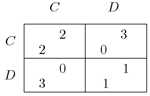
Prisoner's Dilemma MatrixA couple of years ago, I wrote about the prisoner's dilemma, a challenge in making choices without perfect knowledge. That's only one aspect of what is known as game theory, the branch of mathematics that studies strategic situations where the players choice's conflict with each other. Game theory covers strategic games, of course, but also covers many common social, political and economic situations, as well.

Probably the most famous example of game theory is this bar scene from the movie A Beautiful Mind, where it's applied to men trying to get dates in a bar. If you enjoyed that article, Plus Magazine has many more clear articles on game theory that you may enjoy.

A good introduction to game theory can be found in two of the episodes of the program I mentioned in my previous post, Zero Sum Games and Prisoner's Dilemma. You can find a good variety of introductions to game theory on the web, ranging from the basic introductory videos I just mentioned, all the way up to full free game theory courses from Yale!

Once you have an understanding of the basics of game theory, you might want to take another look at the Beautiful Mind scene, and take a deeper look at the game theory analysis of that scene.

Learning about game theory is one thing, though, while applying it is quite another. The whole point of game theory is to learning to make the most effective choices you can for your situation, and I know that Grey Matters readers are people who enjoy learning by doing.

Over at Game Theory .net, they not only offer excellent references for students, but quizzes and tests, too. More importantly four our purposes, for both students and geeks, there is an excellent selection of interactive demonstrations and games to try out!

Even as new situations arise, you can usually find ways to apply classic game theory principles to them. There is an excellent blog, focused on game theory applications to current events, called Mind Your Decisions. Readers of this blog who are interested in game theory will definitely enjoy this blog, as the explanations are clear, and presented in an understandable, often fun, manner. You can find just about everything relating to game theory, ranging from jokes to questions on current events, and even links to other blog posts. I won't rob you of the joy of discovery by linking to specific parts.

As you can see, learning about game theory is just about learning math, it's about evaluation your choices more effectively so that you can make better decisions. If you go through these resources, and thinking about how each type of challenge applies to your own life, you'll be amazed at what you can learn.

2

For All Practical Purposes

Published on Thursday, October 29, 2009 in , , , , ,

Why do so many people hate mathematics? A large part of it is that they associate it with boring problem-solving exercises, and have never been shown how it relates to the real world.
Back in 1987, there was an excellent PBS series, For All Practical Purposes: An Introduction to Contemporary Mathematics, hosted by Sol Garfunkel, that focused on real-world applications of mathematics.

Not only did the series show how real-world applications, it also employed modern mathematical concepts that many people never learned about in high school or college. It also presents them in an easy to understand manner.

The real-world applications were broken up into the areas of management science (scheduling people and workflow to maximize efficiency and effectiveness), statistics, social choice (making choices and taking chances), size and shape, and computer science.

Most of these videos are now available online. Below is a complete list of episodes, with the available ones linked to videos of their respective episodes. Many of the gaps can be filled in by consulting the accompanying textbook of the same name.

Since this video series is more than 20 years old, some of the examples may seem outdated, but all the principles still apply. As a matter of fact, the age of the series is actually an advantage, as you can do some research on these examples, and see how those example were developed over time, and learn even more!

Episode 1: Management Science—Overview
Episode 2: Street Smarts
Episode 3: Trains Planes and Critical Paths
Episode 4: Juggling Machines
Episode 5: Juicy Problems
Episode 6: Statistics—Overview
Episode 7: Behind the Headlines
Episode 8: Picture This
Episode 9: Place Your Bets
Episode 10: Confident Conclusions
Episode 11: Social Choice—Overview
Episode 12: The Impossible Dream
Episode 13: More Equal Than Others
Episode 14: Zero Sum Games
Episode 15: Prisoners Dilemma
Episode 16: On Size and Shape—Overview
Episode 17: How Big Is Too Big
Episode 18: It Grows and Grows
Episode 19: Stand-up Conic
Episode 20: It Started in Greece
Episode 21: Computer Science—Overview
Episode 22: Rules of the Game
Episode 23: Counting by Two's
Episode 24: Creating a Code
Episode 25: Moving Picture Show
Episode 26: Summing Up

If you like Sol Garfunkel's teaching style, you may also enjoy his other series, Algebra: In Simplest Terms, which also has many episodes available online.

1

Halloween Memories

Published on Sunday, October 25, 2009 in , ,

Halloween shall be upon us soon! If you've been developing your memory skills here on Grey Matters, here's how to make them pay off at your Halloween parties.

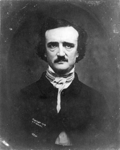
At this time of year, my thoughts naturally turn to Edgar Allan Poe poems. His poetry is timeless, and perfectly suit this time of year. If you want to memorize some poetry to recite at a Halloween party, you might try one of his shorter works, such as Alone or The Valley of Unrest. If you really want a challenge, try his most famous work, The Raven. With these poems and the help of Verbatim, you can impress and scare at the same time!

For more inspiration, you can check out the rest of PoeStories.com, but don't stop there! As always, Dark Side of the Net is a great place to turn this time of year. Their collection of Ghost Stories is unparalleled!

Halloween, besides being connected with scary things, is also connected with funny things. We don't need to focus on only the scary. Over at poetry4kids.wordpress.com (not to be confused with Ken Nesbitt's excellent poetry4kids.com), they've been focusing on Halloween silliness all month.

To round out this post, I'd like to leave you with a classic tale, The Tell-Tale Heart. The version below is an animated version from 1953, and was the first film to be rated X in Great Britain, yet was nominated for an Oscar in the USA. It's less than 8 minutes long, but creates the mood and tells the story perfectly.


Enjoy, and happy Halloween!

0

Happy 95th Birthday, Martin Gardner!

Published on Thursday, October 22, 2009 in , , , , , , ,

Martin GardnerYesterday, October 21st, was Martin Gardner's 95th birthday, and we here at Grey Matters wish him a very happy birthday!

If you're not familiar with Martin Gardner, he's the only individual whose name is a label here on Grey Matters. His best known work is his Scientific American Mathematical Games column, which are all available as books, and even on CD-ROM.

The best introduction to the man is David Suzuki's documentary Mystery and Magic of Mathematics: Martin Gardner and Friends, which I first mentioned last December.

I guarantee that if more people taught mathematical concepts like Martin Gardner does, people bragging about hating or doing poorly in math would be far fewer in number.

Over at Metafilter, in an entry appropriately titled Martin has turned thousands of children into mathematicians, and thousands of mathematicians into children, you can get an idea not only of some his best-known work, but also the appreciation people have for his work.

If you go through Grey Matters' Marting Garder section, it's not so much about learning math as it is discovering treasure. Wandering through his prolific authoring and co-authoring of over 70 books also has this same effect.

I myself was introduced to Martin Gardner's works as a kid when I was given one of his Aha! books (click to view explore these wonderful books). These books contain very high-level concepts that are usually reserved for college study, but it presents them in such a simple and straightforward manner that even some older pre-teens can grasp them.

Yes, this post is short, but if you're willing to go through and explore Martin Gardner's work and influence in just these few links, you'll find that you'll probably spend more time on this post than any of the others.

He's truly changed mathematics for the better by bringing a sense of fun into it. Even this blog would be a far poorer place without the work of Martin Gardner.

0

Even More Quick Snippets

Published on Sunday, October 18, 2009 in , , , , , , , , ,

LinksIt's time once again for snippets! This edition is focused on updates.

• The bug in Verbatim has been fixed! The original problem was that the program couldn't read XML files on other servers due to the same origin policy. That has now been fixed, and files can be read from anywhere. As an example, here's Verbatim loading a poem file from freetzi.com.

The modification itself took only a few hours to program. Finding the approach was the hard part! It seemed like I was looking through an endless array of methods to allow Javascript to load programs from other domains. I'm really pleased with the solution I found, as it allowed me to keep the program working the same as far as the user was concerned. The same XML files that worked with it before still work with it now in the same way. Even better for me, I didn't have to rewrite the manual or reshoot any of the instructional videos!

I've also fixed a minor bug in the memorize text section. Originally, if the lines were hidden when you changed the chosen piece or number of lines, the poem wouldn't be displayed, and the only way to bring it back was to restart the program. Now, even if the lines are hidden when you change the piece or number of lines, the lines and title will display correctly.

Speaking of the programming itself, Verbatim uses several techniques that might be of interest to my fellow Javascript programmers. They're all detailed in the srouce code, but I also thought I'd include them here for those who are interested:

• Centering an image that's wider than the screen
• Detecting an iPhone or iPod Touch user on your site
• Preventing a div from overlapping other elements
• Reading variables from a URL
• Trimming a url to get just a file name
• Using CSS to autospace elements on a toolbar
• Using Yahoo! Pipes, Jquery and JSON to read XML files from other domains
• Back in August, I reviewed the Stacked Deck iPhone Native App. For what it did, I liked it, but it was missing the ability to add non-standard stacks. I ended the above review by stating:
Due to mostly to the glaring inability to add a custom stack when it seems to be offered by the program, I'm afraid I can't recommend this program just yet. However, it does have so many good qualities, it is definitely worth keeping an eye on for updated versions.
The update for which I'd been hoping was just released this past Friday!

Stacked Deck 1.0.1 (iTunes Link) has been fixed so that it now saves custom stacks! Even more impressive, it saves plenty of work by notifying you anytime you enter a duplicate card.

I can now give Stacked Deck the recommendation I've been holding back.

• Thanks to what I learned while programming Verbatim, I've been able to give the iPhone/iPod Touch Mental Gym Menu a face-lift. Besides the new look, I've added links to Verbatim, the Grey Matters blog, and eliminated some games and replaced them with others. I also believe that it's more intuitive for iPhone and iPod Touch users, too.

• New videos have been added to the Grey Matters Miro Video Channel. The first is The Story of Pi, a segment of a Project MATHEMATICS! episode that help visualize concepts related to Pi.

The other videos I added are the three episodes of Dr. Frank's Math Minutes. Here you learn about fractions in a pizzeria, how to measure the height of a building while staying on the ground, and the principles behind Newton's Law of Cooling in a hamburger joint. The links to each episode's page is included in the channel, so you can download accompanying handouts and worksheets.

These episodes are hosted by Dr. Frank Wang. That name may sound familiar to long-time Grey Matters readers, as I featured other videos of his back in May of 2006 on my video blog.

That's all for this edition of snippets. I'll see you Thursday!

0

Sporcle Game Creation Center

Published on Thursday, October 15, 2009 in , , ,

Timed QuizzesIn August of 2008, I introduced the Time Quiz Generator for those who wanted to create their own timed quizzes for their site, similar to the ones you find at Sporcle. Sporcle has now released their own version, called the Sporcle Game Creation Center.

To create a game, you must first sign up for a free Sporcle account, and log in. Once you're in, you can simply click the create tab to begin.

The best way to start is to read the Game Creation FAQ and the Cheat Sheet (PDF).

Before I continue, I'd like to clarify a few differences between the Sporcle Game Creator (SGC) and the Timed Quiz Generator (TQG). The SGC quizzes can only be used and played on Sporcle, but may also be included by Sporcle on their official list of verified quizzes. The TQG, on the other hand, generates code you can use to place your own quiz on your own site. There's not that much conflict between them, so the TQG will remain available.

On the SGC, you edit the quiz itself in 3 tabs, Game Info, Data and Style. As you go through these steps, you can test the quiz at any time, using the most recently saved version of your quiz.

The Game Info tab is the one detailed in the cheatsheet, where you set up the topic and basic structure of the game. This includes things like the title, the URL, the time, the column names, and so on.

The Data tab, of course, is where you enter your answers. As long as you're not using the 3rd column for anything (it's often used for hints and such), you can enter ee into it to denote an easter egg-type answer.

Style simply lets you control the appearance of the quiz. It's easy to use, as clicking on any of the color entries will bring up a color selector that is very intuitive. If you know your HTML hex color codes, you can also enter them directly just by typing.

After you've created and tested your quiz to the point where you're satisfied with it, it's time to click on the Finish Up tab. Here is where you take the quiz live, so other Sporcle users can see your quizzes. As an option, you can also give Sporcle permission to use your quiz on the front page, and announce it on Twitter, as well.

This is a great tool to help you memorize various types of lists, and also to share and challenge others from a large community of puzzle-takers!

1

US Constitutional Amendment Mnemonics (Part III)

Published on Sunday, October 11, 2009 in , , , ,

Mdgilkison's We The People graphicIn order to form a more perfect union, you must master not only the first 9 amendments, and not only the second 9 amendments, but all 27, including the ones I'm about to teach you.

We start this post with the 19th amendment. Just about anyone who grew up in the 1970s or 1980s can tell you what the 19th amendment is, thanks to Essra Mohawk and Schoolhouse Rock!:


If the lyrics themselves don't help bring the women's rights amendment to mind as number 19, imagine the scene with all those women coming out of the voting booth, and imagine that there's exactly 19, 190, or 1900. To help lock it in, you could also imagine that they're all 19, too.

There's a simple mnemonic for memorizing the 16th through 19th amendments in order as a group, as well: “In come senators with wine and women.” “In come” refers to the income tax amendment (#16). “senators” refers to the 17th amendment, dealing with the election of senators, “wine” referring to the prohibition amendment (the 18th), and “women“, of course, referring to the women's vote amendment.

The 20th amendment almost writes its own mnemonic. It states that the president takes office on January 20th, so you can just think of it as the January 20th amendment. It not only covers what happens when a president goes into office, but also when a president goes out, such as a death in the office. The other parts concern how often Congress must meet and what happens when a state representative dies. Remember, this was covered for senators in the 17th amendment.

We've already covered 21 in the previous article, since it repealed the 18th amendment. As a refresher: You can't drink at 18, but you can drink at 21.

amendment 22 is another one that nearly writes its own mnemonic. It limits a President “2”(to) 2 terms.

The 23rd amendment can be thought of as the “23-D-C” amendment, because it allows citizens of Washington, D.C. to vote for the president.

Moving on to amendment 24, this amendment prohibits poll taxes. In other words, it is unconstitutional to charge people for registering to vote. If you link amendment 24 with December 24th, when Santa is very busy at the North Pole (or “No Pol”), you can easily recall that this is the “no poll tax” amendment.

The 25th amendment details the order of succession when the President dies. An easy way to remember this is the short poem, “Prez not alive? See 25!”

Since we've had a few easy mnemonics, we pay for that ease at the 26th amendment. This amendment lowered the voting age to 18. You can remember this by recalling that 26-(2+6)=18. True, we're throwing some arithmetic into the mix, but focusing on this fact can help you remember it all the more.

We're almost done. The last amendment is the 27th, which says that Congress can vote themselves a pay raise, but it won't take effect until after the next Congressional election. Imagine Congress voting themselves to a pay level of $270,000 (click here for current 2009 Congressional pay levels), to help you remember that this is covered by amendment 27. You can also think of it as the highest amendment number covering the highest salaries.

The 27th amendment is not only the highest numbered amendment, it also is the amendment that took the longest to ratify. It was first proposed on September 25, 1789, and wasn't ratified until May 7, 1992 - over 202 years!

Once you've practiced these amendment mnemonics, it's time to put yourself to the test. Here's a constitutional amendment quiz that gives you the subject of the amendment, and you have to give the correct number. Just as in the US Constitution, all the amendment numbers are given as Roman Numerals, so here's a quick Roman numeral refresher course, should you need it.

4

US Constitutional Amendment Mnemonics (Part II)

Published on Thursday, October 08, 2009 in , , ,

Mdgilkison's We The People graphicHave you been practicing the first 9 constitutional amendments? I hope so, because it's time to move on to amendments 10 through 18!

Amendment 9 and amendment 10 sort of work together. While 9 says people have rights not spelled out in the US Constitution, 10 says that the United States (as in, the federal government) has only those powers explicitly spelled out in the US Constitution. The remaining powers are delegated to the states or the people. This is sometimes known as the “state's rights” amendment. Since the phrase “state right” has 10 letters, it's easy to remeber that it's the 10th amendment.

While there's still 17 amendments to go, you now already know the complete Bill of Rights (the first 10 amendments).


1 citizen may not sue 1 state that isn't the citizen's own with permission from the defending's states court. These two “1s” are kept seperate by a number that brings two “1s” together, amendment 11.

Amendment 12 covers the elections of America's jobs “1” and “2”, that of the US President and US Vice-President. This amendment requires separate ballots to be cast for each office.

The next 3 amendments can be thought of as the “Post-Civil War” amendments, as they all deal with issues concerning the former slaves, and all were ratified in 5 or less years after the Civil War.

Amendment 13 freed the slaves. It's not too hard to think of how there were only 13 colonies when America liberated itself from the British. Just remember that 13 amendments after the 13 colonies were liberated, the slaves were liberated as well.

The are many different parts to the 14th amendment, but it all boils down to foreign-born citizens and natural-born citizens having the same rights. Think of this amendment as giving equal rights to “Foreignteen”-born citizens, and this should be easy to remember.

Amendment 15 basically says that every man may vote, regardless of whether or not he was a former slave (women still couldn't vote when this amendment was ratified). The phrase “Every man may vote” has 15 letters, making this one easy to remember.

Taxes, in the US, are due on April 15th. If you send them in on or after April 16th, you can get in big trouble. Since it's the 16th amendment that gives the federal government power to tax, just link April 16th, as the day when the federal government should have their money, to amendment 16, as the reason why they're getting that money.

The election of senators is the subject of amendment 17. I've actually found 2 good mnemonics for remembering this. First, the phrase “elect your senators” has 17 letters. Also, 7-1 (from the number 17) equals 6, which is the number of years for which a senator serves.

This post will now be rounded out by amendment 18, which bans the the manufacture, sale, or transportation of intoxicating liquors. Currently, this is the only constitutional amendment ever to be repealed, which was done by the 21st amendment. It's not only best to remember these two together, but also quite easy. Just imagine you live in a state where you can't drink at 18, but you can drink at 21.

Practice these mnemonics, and go over the first 9, as well. Once you have them down, you'll actually to be able to recall more than 2/3rds of the the US Constitutional Amendments!

This coming Sunday, we'll wrap things up with the final 9 amendments. Actually, since we skipped ahead to the 21st when talking about the 18th amendment, there's really only 8 more you need to learn.

10

US Constitutional Amendment Mnemonics (Part I)

Published on Sunday, October 04, 2009 in , , ,

Mdgilkison's We The People graphicOne of the toughest things to remember, whether you were born in the US, or came here as an immigrant, is the 27 Amendments to the US Constitution. In this and the next 2 posts, I'm going to teach you a series of mnemonics that will help you remember all of them.

Let's start with a quick refresher on the basics of the US Constitution with some help from Schoolhouse Rock:


What I'm about to teach isn't the only way to learn the US Constitution. The movie Born Yesterday (the 1993 version) features a song that teaches the amendments.

The first amendment to the US Constitution is the only one where there are 6 different rights spelled out, so you can remember these rights with the nonsense word RAPPOS. RAPPOS is an acronym for the freedoms of Religion, Assembly, Petition, Press, Opinion and Speech. Most people are familiar enough with the first amendment that there's no need to link the number 1 to these rights.

When you're trying to remember what's in the 2nd amendment, just think of someone calling out, “2 Arms! 2 Arms!” Yep, the 2nd amendment is the right to bear arms.

Amendment 3 is remembered with 3 words: No housing troops. The 3rd amendment is the right to freedom from being required to house troops during peacetime. This was considered important, as the British had often forced the American colonists to house the redcoats.

The 4th amendment, protection against unreasonable search and seizure, is easily remembered with by asking the question: What are you searching 4?

The 5th amendment is another famous one, as you so often see movies and TV shows where someone is pleading their 5th amendment rights. This is always is court, because they are asserting their right to not be forced to testify against themselves.

Public speedy trials, a phrase that contains only 6-letter words, is the mnemonic for the 6th amendment. This is also the amendment that says someone accused in court has the right to confront his accusers, and the right to a defense counsel. The 5th and 6th can be thought of together as the Miranda warning rights.

How can you remember the 7th amendment? 7 is supposed to be good luck, and in civil cases, having a trial by jury can bring good luck towards reaching a favorable decision.

The mnemonic for the 8th amendment will probably be the most vivid of the mnemonics in this first section. Imagine that you've been convicted of a crime in a village of cannibals, and as punishment, they ate you! This seems like cruel and unusual punishment, doesn't it? The 8th amendment, fortunately, protects you from cruel and unusual punishments like this.

Users of the Major/Peg system already associate 9 with the letter P, as the letter P looks like a 9 facing the other way. That helps with remember the 9th amendment, where P stands for Power and People. The 9th amendment makes it clear that individuals do have rights that aren't explicity mentioned in the Constitution.

If you can remember these, you'll be able to recall not only a full third of the constitutional amendments, but 90% of the Bill of Rights, as well! Practice these, and on Thursday, I'll teach you mnemonics for amendments 10 to 18 (and maybe even sneak an extra one in).

0

Siegfried & Roy

Published on Thursday, October 01, 2009 in , , ,

Siegfried & Roy StatueIt seems incredible, especially to those of us in Las Vegas, but this coming Saturday, October 3, 2009, it will have been 6 years since they regularly performed at the Mirage Hotel & Casino.

Details are sketchy about Roy's tigery injury, but we do know that Montecore, the show's star 7-year-old white tiger bit Roy on the neck, ending the show's run.

However, Siegfried & Roy are not ones to give up their Masters of the Impossible title easily, promising to perform together at least one more time. With Roy's injury, though, few expected they could pull this off.

Sure enough, this past February, they returned to the stage with their illusions in a short 10-minute performance to benefit the building of the Lou Ruvo Brain Institute. It was filmed for 20/20, and the full episode, including the performance, is currently preserved on YouTube.

Enjoy this look back at the career of Siegfried & Roy, and marvel at their resolve to accomplish this 1-night return:

7

Verbatim Bug Found!

Published on Sunday, September 27, 2009 in , , , , , ,

Verbatim(UPDATE - July 14, 2011: Verbatim has been updated and improved. Click here to learn about the update!)

A minor bug has been found in Verbatim. It's not serious, but it does did prevent effective use of the program.

Grey Matters reader “Bev” had trouble getting Verbatim to read her XML file, and asked me about the exact nature of the problem. Upon further investigation, it turns out that the problem boils down to Verbatim being on one domain and her file being on a totally different domain. As a security feature, most browsers specifically prevent a Javascript program (such as Verbatim) from accessing an XML file under a totally different domain.

Update (October 15, 2009): The bug has been fixed, and this post has been edited concerning the changes.

It took quite a bit of research to find the solution, but it's done. Except that you now have the ability to use XML files located on almost any server (except for those overly-strict ones that prevent ANY external access, which is unusual), you shouldn't notice any differences between the original and current versions of Verbatim.

The original XML files still work with the program, and it still works as in the videos.

I eliminated the verbatim.zip file I originally offered as part of a short-term solution, as you can now use the program here, and access your files anywhere.

Bev, thank you for alerting me to this problem!

1

Timed Quiz Milestones

Published on Thursday, September 24, 2009 in , , ,

Timed QuizzesThe most popular blog entry on Grey Matters, How Many Xs Can You Name In Y Minutes? has been the source of several milestones recently.

First, the total number of quizzes has now passed the 2,500 mark! That's more than 500 quizzes in just 3 months.

Since most of the quizzes on that list come from Sporcle, I predicted in that entry that we'd probably see Sporcle's quizzes alone pass the 2,000 mark about the time we reached 2,600 quizzes. Only yesterday, Sporcle posted their 2,000th quiz. How many quizzes were on the list when I posted the update that included that 2,000th quiz? The number was 2,569 quizzes! Not a bad estimation, eh?

Sporcle also reached another milestone shortly before their 2,000th quiz. They've just reached over 100 million games played! They observed this feat by posting a quiz concerning things with either hundred or million in their names.

The Timed Quizzes RSS Feed is about to hit its own milestone, as well. At this writing, it's a 964 KB file, and it won't be long before it 1 full megabyte! Even with the quiz names, links, tags, and other information, that's large for a text file.

With so many of these milestones coming so close together, it also has me thinking that the list itself needs to be redesigned, to improve its usefulness. Even with the recent addition of the droplist filter, I can see that more can be done to improve the ease of finding a quiz on a desired topic.

At this point, I'm still looking into the possibilities and have no definite plans. If you have any suggestions, I'd love to hear them!